

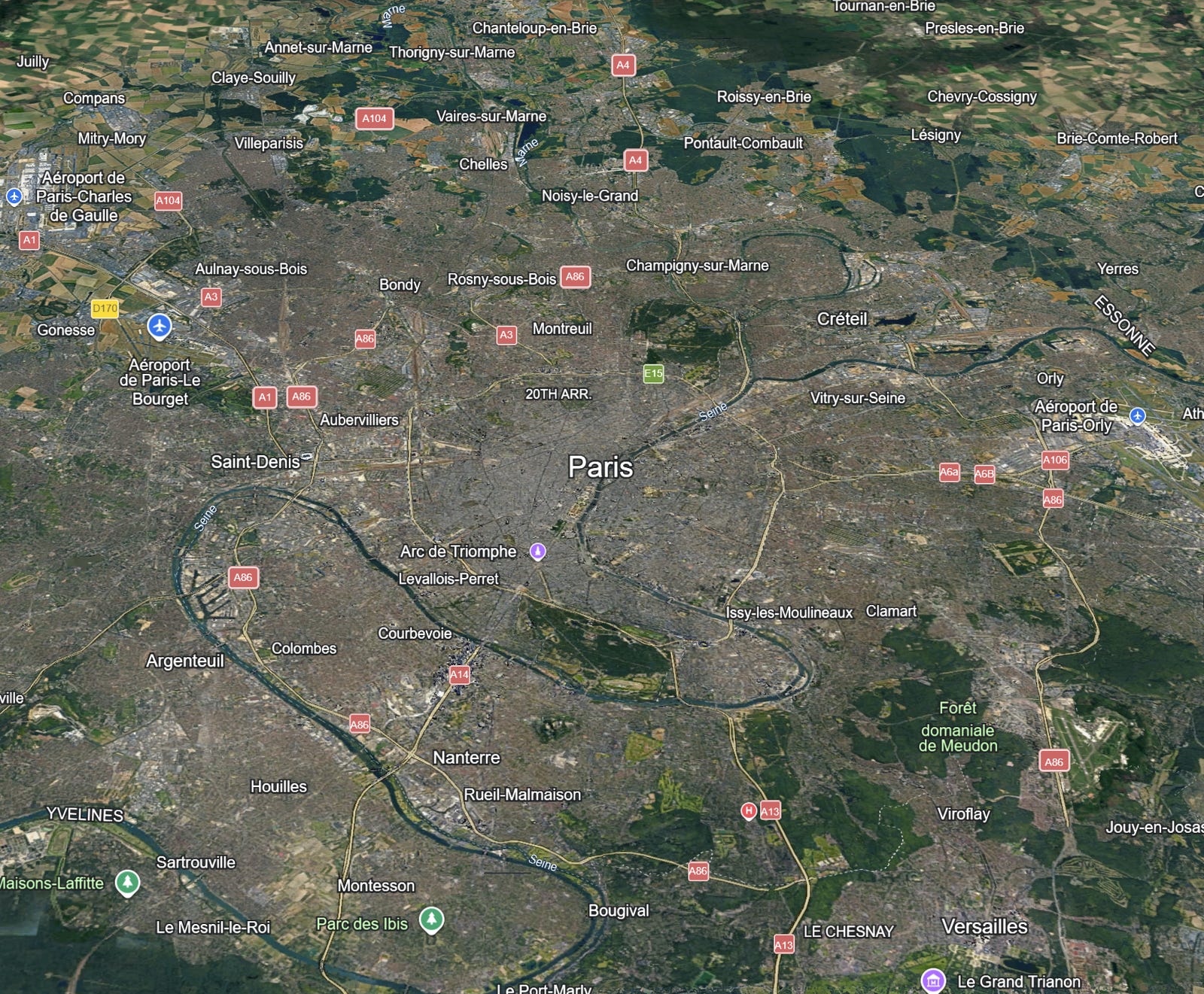
Google seems to have carelessly and unintentionally advanced the deepfake frontier on Thursday when it integrated Nano Banana, its AI image generator, into Google Earth, its comprehensive satellite map.
The Atlantic’s Matteo Wong followed Google’s instructions to “pick a spot on the map, and start bringing your ideas to life,” setting office buildings on fire, inserting a crater where the Eiffel Tower should be, and putting a homeless encampment on the White House lawn.
Google said yesterday that it “takes misinformation seriously” and was rolling back the feature after users — presumably not all journalists, though they ironically seem to have been the most enthusiastic early adopters — used the tool to generate imagery of events that would be newsworthy, if real. NPR said it was able to “easily generate images of Iran’s Kharg Island on fire, and a flooded U.S. Capitol complex.” BBC described generating “a sinkhole swallowing the Great Pyramid of Giza and Russian tanks in Ukraine’s capital.”
The problem is less that satellite imagery is so easily doctored and more that, until now, it wasn’t commonly done. People aren’t yet used to questioning imagery purportedly taken from orbit. This will have to change. Given all the press, I doubt bad guys will refrain from the tactic just because Google has stopped making it quite so easy.
The analyses and opinions expressed on AI StopWatch reflect the views of the individual contributors and the sources they cover, and should not be taken as official positions of the Machine Intelligence Research Institute.