


When Americans go looking for the reasons why it has become so much harder to build housing and infrastructure in the U.S., the finger is usually pointed at regulations, especially environmental regulations. But such regulations are typically more of a scab that has formed over the actual obstacle: the ability of citizens to sue. Any aggrieved party can potentially halt a project if they can point to a law that is being violated.
Elaborate regulations around permitting spring up as safe corridors against such litigation. A permitting process is an agreed-upon way to show agencies and the courts that a project is in compliance with the law. This is a main reason industries often ask to be regulated.
If the government wants to make life easier for builders, then, relaxing permitting requirements can actually be counterproductive. Permitting is slow and expensive, but without it, builders are more exposed to litigation, and face greater uncertainty about whether a project will go through at all. Investors tend to hate uncertainty more than they hate a lengthy permitting process.
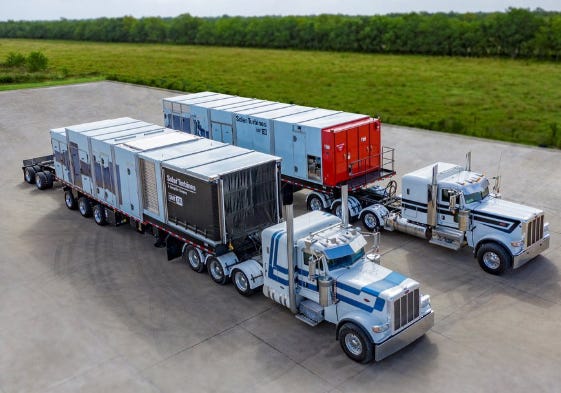
So if you are the White House, and you want to make it easier for data centers to be built and operated in ramshackle fashion — e.g., powered by noisy and polluting mobile gas turbines in populated areas, as Elon Musk’s AI company is doing in Tennessee — you have to do more than instruct agencies to relax permitting requirements. You have to limit the ability of citizens to sue.
You could do this by working with Congress to repeal laws plaintiffs can point to as being broken (like the Clean Air Act, in this case), or to pass laws providing legal immunity for certain activities. But this is politically complicated, and may not be possible if Congress doesn’t want to go along.
So you might try something bolder, and challenge the very idea of citizen suits.
As reported in the Associated Press, Elon Musk’s xAI (now part of SpaceX), with the administration’s support, is arguing that Congress never had the constitutional authority to allow anyone to enforce federal laws except the President.
This is seen as a legal long shot, made remotely possible only by the current composition of the Supreme Court and pressure from the White House. If successful, this would shake up the nation’s legal landscape far beyond the data center buildout. Citizen suits have successfully punished oil and gas companies that have contaminated water supplies and caused other harms, and presumably deterred greater corporate misbehavior.
In the meantime, the gas turbines at SpaceX’s Memphis data center remain in operation, because the Trump administration has been telling the courts that the facility supports the Department of War and is thus vital to national security. The administration could presumably try to make this claim about any U.S. data center, but at some point the courts may scoff.
Observers note how backwards it is for the executive branch, charged with enforcing laws, to instead be shielding companies from them. Citizen suits have been serving as a check against this pattern. Should they become impossible, many laws might as well not exist. Those tracking the many ways the AI race could potentially harm America should be following this story.
The analyses and opinions expressed on AI StopWatch reflect the views of the individual contributors and the sources they cover, and should not be taken as official positions of the Machine Intelligence Research Institute.