
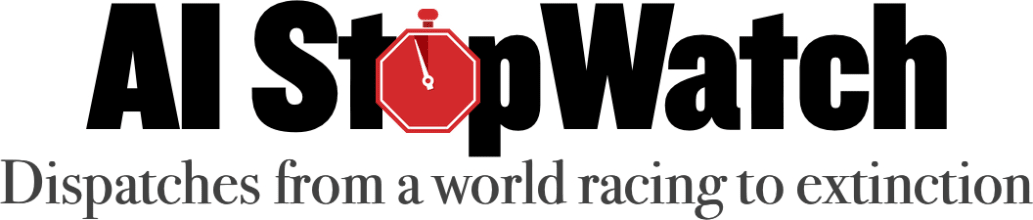


The U.S. Federal Trade Commission has proposed a new policy targeting “misleading” or “biased” AI outputs.
Last December’s executive order on AI directed the FTC to take a stance on regulating AI. Last month, the FTC obliged, releasing a policy statement and opening it for public comment, and the statement was recently covered by Fox News.
The gist: Chatbots are products that inform and assist users, who reasonably expect those products to balance “succinctness, clarity, relevance, accuracy, and other objectives” in their outputs. But if AI companies introduce hidden bias in those outputs, without clearly disclosing they’ve done so, that’s lying to consumers and the FTC can crack down.
The principle is sound, but the practice is complicated. The FTC is used to regulating traditional products, software or otherwise, with predictable, programmed behavior and mechanics. As I’ve written before, though, chatbots are an unprecedented level of weirdness. AI companies don’t actually have that much control over the ways their AIs behave; just look at sycophancy and AI psychosis, Grok “MechaHitler” 4, or the recent spate of AIs conspiring to break out of containment.
When it comes to modern AI, there is no such thing as a baseline, neutral, “unsteered” output. AI behavior is the consequence of millions of barely-understood tweaks and decisions in the algorithms and data that train them.
Perhaps it’s a good thing, then, that the FTC suggests a get-out-of-fines-free card. A sufficiently clear disclaimer might absolve AI companies of blame for misleading outputs. They offer some guidelines about what might qualify as sufficient, but only in broad terms. Even with the clarifications, I could imagine the proposed policy merely causing a proliferation of widely ignored warnings like those seen on cigarette packs.
Though I do wonder what sort of disclaimers may be deemed necessary. “Warning: This product may spontaneously plot its escape and go on a hacking rampage.” Is it enough to publicize the system prompt? Do AI labs need to explicitly and repeatedly flag for users that their training penalizes use of racist language? The FTC seems to say, maybe:
An adequate disclaimer could not be buried in terms of service, for instance. It would have to clearly and conspicuously dispel the notion that the system is designed to give the best answer possible. Such a disclaimer would need to be prominent, and it is doubtful a one-time disclosure subsequently hidden away in fine print would suffice.
Still, a loud disclaimer is not that hard to set up. I wonder whether this loophole is a deliberate choice on the FTC’s part, nominally deferring to the admin while avoiding regulations with politically controversial teeth.
Both the executive order and the subsequent policy statement explicitly aim to preempt state AI regulation that (the authors claim) might force AI companies to bias their products’ outputs. The FTC’s policy statement gestures at politically charged terms like “equity” and “disparate impact” in a way that suggests their intent goes beyond strictly protecting consumers. Fox News went a step further and touted the policy as a way to curtail left-leaning chatbots.
I’m worried that the proposed policy is too vague. I’m not a legal expert, but it seems like an official federal policy that says “undisclosed output steering is deceptive” might backfire when states begin to sue AI companies on those grounds. With the field as chaotic as it is, both sides could have a devil of a time proving what constitutes “steering” AI behavior or a sufficiently clear disclaimer.
More broadly, I worry that the difficulties in judging what constitutes “misleading” or “undisclosed” may enable selective enforcement that is itself a dangerous kind of censorship. That concern extends to state and federal policies.
I don’t particularly trust our highly polarized government or its agencies to decide which claims are “objective” or “unbiased”, whether those claims are made by AIs or humans. I don’t like the precedent this sets, no matter who’s in charge from year to year.
The analyses and opinions expressed on AI StopWatch reflect the views of the individual contributors and the sources they cover, and should not be taken as official positions of the Machine Intelligence Research Institute.