


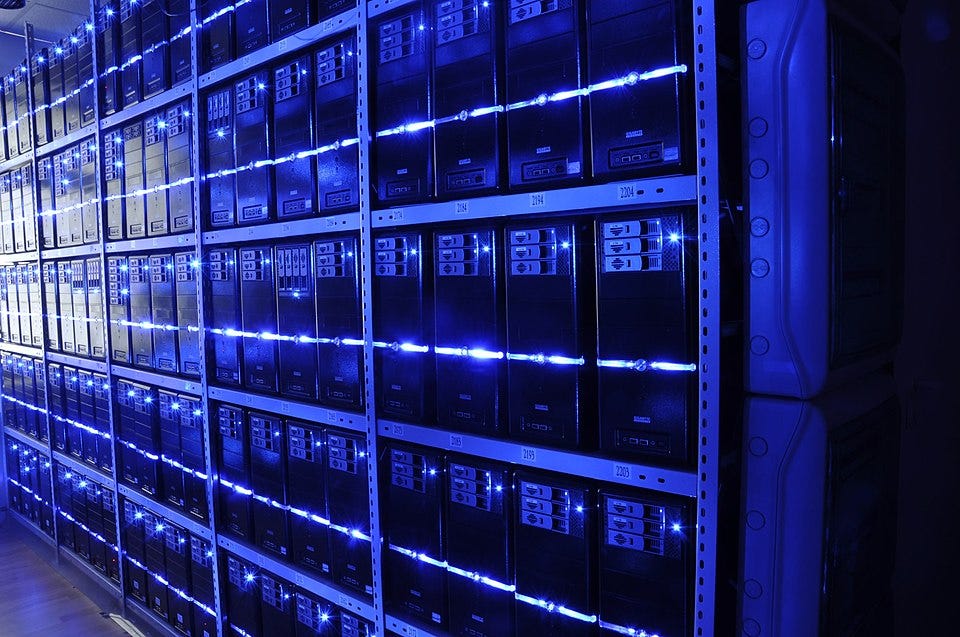

New York has become the first U.S. state to impose a moratorium on data center construction. Governor Kathy Hochul signed an executive order pausing environmental permits for facilities that consume at least 50 megawatts. The executive order lasts for one year, and is meant to give regulators time to write standards on energy demand, water use, and other issues. New York’s state legislature recently passed its own one-year moratorium, targeting facilities that consume 20+ megawatts; at this time, Hochul has neither signed nor vetoed that bill.
Governments are not all reacting to data centers in the same way, as noted by Reuters. Earlier this year, Governor Janet Mills of Maine vetoed legislation that would have imposed an eighteen-month moratorium on facilities that consume 20+ megawatts. In the Netherlands, Amsterdam banned new data centers and expansions to data centers until 2030; a similar freeze around Dublin, Ireland, in place since 2021, was recently lifted.
Whether their concern is water usage, noise pollution, or something else, ordinary people strongly dislike data centers. A March Gallup poll found that 71% of Americans oppose data centers in their community, more than oppose living near nuclear power plants. This is bipartisan opposition: Democrats, Republicans, and Independents were all more likely to oppose than support data centers. It is also a strong opposition: For comparison, “since Gallup first asked the nuclear power plant question in 2001, the high point in opposition has been 63%.”
While congressional support for a data center moratorium is concentrated among Democrats (and Bernie Sanders), this doesn’t mean that voters will organize themselves along those lines. Opposition to data centers, to quote Charlie Berens, is “the most bipartisan issue since beer.”
The analyses and opinions expressed on AI StopWatch reflect the views of the individual contributors and the sources they cover, and should not be taken as official positions of the Machine Intelligence Research Institute.
You can receive emails of dispatches as we write them, or subscribe to our Daily Digest for a once-a-day compilation.