


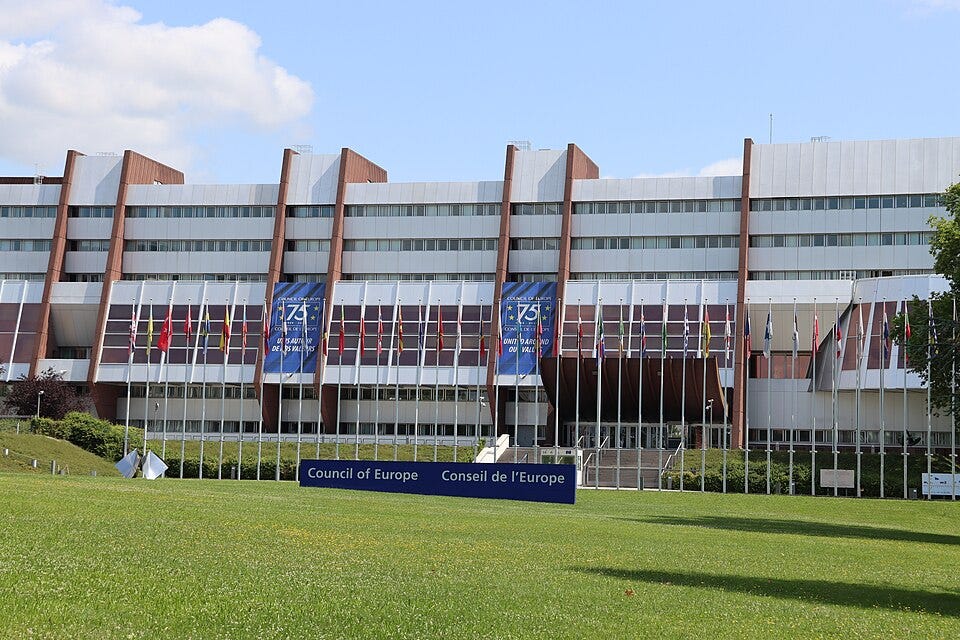
Alain Berset, Secretary General of the Council of Europe, wants you to know that “we have a treaty” on AI already, and “the hard part” is done. All we need to do now is enforce that treaty and add more signatories. But the “binding international treaty” to which Berset refers is a far cry from MIRI’s proposed treaty. I don’t simply mean that there are some major differences between the two. They imagine entirely different threats.
The names alone distinguish them: MIRI is calling for an International Agreement to Prevent the Premature Creation of Artificial Superintelligence. What Berset champions is a Framework Convention on Artificial Intelligence and Human Rights, Democracy and the Rule of Law.
Now, I like all of those things that the Framework Convention mentions (except perhaps for artificial intelligence, which you’ll understand I’m a little conflicted about). Berset isn’t wrong to think that frontier AI models could be used to support authoritarian regimes and pose a severe threat to human rights. I’ve previously raised this as a concern on StopWatch. But that’s about where Berset’s concerns end.
The dangers that he imagines are fundamentally dangers of the past and present: Every risk and problem entails a decision that can or should be appealed, an authority that can be held to account, a human who either is or could be in the loop. To paraphrase Secretary-General Guterres, whose remarks on artificial intelligence I covered yesterday, Berset is preparing for machines that follow commands; he is not ready for machines that decide. The European Court of Human Rights can’t order a remedy for extinction after the fact.
The analyses and opinions expressed on AI StopWatch reflect the views of the individual contributors and the sources they cover, and should not be taken as official positions of the Machine Intelligence Research Institute.
You can receive emails of dispatches as we write them, or subscribe to our Daily Digest for a once-a-day compilation.