


This morning, OpenAI announced that an internal AI model had solved an important mathematical problem, which I’m calling (for brevity, because we’re mostly laypeople here) the Navier-Stokes problem (Wiki, SimpleWiki). It is one of the seven Millennium Prize Problems selected twenty-six years ago by the Clay Mathematics Institute, each one worth a million dollars to the first person or party to solve that problem.
What complicates the story is that, the day before, NYU mathematician Tristan Buckmaster posted three related results of his own, along with a statement alleging that OpenAI had pressured him on the issue of credit, and specifically that it had pushed to keep his collaborator, Levent Alpöge, off a paper on the Navier-Stokes solution because Alpöge works at Anthropic. (OpenAI disputes Buckmaster’s account.)
The coverage has largely been about this dispute, and no wonder. It’s full of human drama. You could make a movie out of this in ten years, if anyone’s still alive. Depending on who you’re reading, it can be difficult to put everything together — the accounts can be fragmentary, or one-sided, or assume specialized knowledge — so I think it’s important to discuss what happened (and what didn’t happen) rather than give you a three-line summary.
Here’s what we know: Buckmaster and Alpöge spent (roughly) the past year not on the Navier-Stokes problem itself, but on a set of closely related fluid equations that mathematicians treat as stepping stones toward it. Their work relied on an approach developed by two other mathematicians, Diego Córdoba and Luis Martínez-Zoroa. (In mathematics, as we’ll see shortly, the journey can be just as fruitful as the destination. It’s important, in several ways, that Buckmaster and Alpöge built on preexisting work.) The collaboration between Buckmaster and Alpöge was personal, with no institutional involvement from NYU or Anthropic. They used AI models from both Anthropic and OpenAI, but Buckmaster paid for these from his own research funds.
Here’s the timeline, according to Buckmaster and OpenAI:
On August 15th, they got their results, effectively setting down two of those stepping stones toward the Navier-Stokes problem — one of those was the Euler equations, which will come up later. On August 22nd, a proof-checking program called Lean verified those results. In his statement on this process, Buckmaster emphasized the importance of Córdoba and Martínez-Zoroa’s prior work; he stated his belief that Martínez-Zoroa deserves a Fields Medal. This is a very high honor: it is awarded only every four years, to no more than four people at a time.
On August 28th, OpenAI began training a new model, more powerful than GPT-6 Astra. On September 1st, it heard rumors that two Millennium Prize Problems had been solved, so it pointed its in-training model at the Millennium Prize Problems.
On September 3rd, as the rumor spread, and, having been tipped off that their own work had reached OpenAI, Buckmaster emailed a mathematician who worked there.
On September 4th, OpenAI asked to speak that day; Buckmaster asked if they could speak the following week.
On September 5th, the Navier-Stokes solution was obtained, and on September 6th, Lean verified the solution.
Also on September 6th, Buckmaster spoke twice with researchers from OpenAI, including Sébastien Bubeck. Alpöge was not on these calls. The content of these calls is a bit more contested than the rest of this timeline.
What Buckmaster alleges: He was told that an internal OpenAI model had produced a roughly 100-page proof of the Navier-Stokes solution, with very little human input. The model, he was told, had just been given the problem. Buckmaster says that this claim came apart as they talked, however, as members of OpenAI’s team sent corrections to Bubeck over their internal chat: An entire team had worked on it. Navier-Stokes was one of a number of things they had tried. The team had started on a different version of the problem, and warmed up the model on easier problems, including Euler (which Buckmaster had worked on). An enormous amount of compute had gone into the process.
Subsequently, two proposals were made: Publish on consecutive days or have Buckmaster write up OpenAI’s result as the sole author, but removing credit from Alpöge entirely, because Alpöge works at Anthropic. When Buckmaster declined and said he would rather go public, he was asked why he would choose to ruin his career like that.
I want to be clear about what Buckmaster is not alleging: He did not see OpenAI’s proof and does not know what the model did or how it did that. Buckmaster and Alpöge put every draft of their work into OpenAI’s Codex, but he does not claim to know whether OpenAI accessed this material and he is not making that accusation. However, there are a number of ways that you can approach the Navier-Stokes problem, and the specific approach OpenAI’s model took was the route which Córdoba and Martínez-Zoroa opened and Buckmaster and Alpöge pursued. According to Buckmaster, almost nobody else was working on it, and “it is not the direction one arrives at in a few days by giving a model the problem statement.”
OpenAI denies that its researchers or agents saw Buckmaster and Alpöge’s work, and denies accessing specific user data. It admits it cannot rule out that de-identified data from their use of OpenAI’s products was used to improve the models. Bubeck has also denied Buckmaster’s account of the authorship question and apologized for the remark about Buckmaster’s career.
I don’t know who is right about the phone calls. I have my personal thoughts on the matter, but I hope that I’ve laid out the facts concretely and without bias — and I have to say, for all the human drama that makes this an excellent news story, it’s the least important part of what happened.
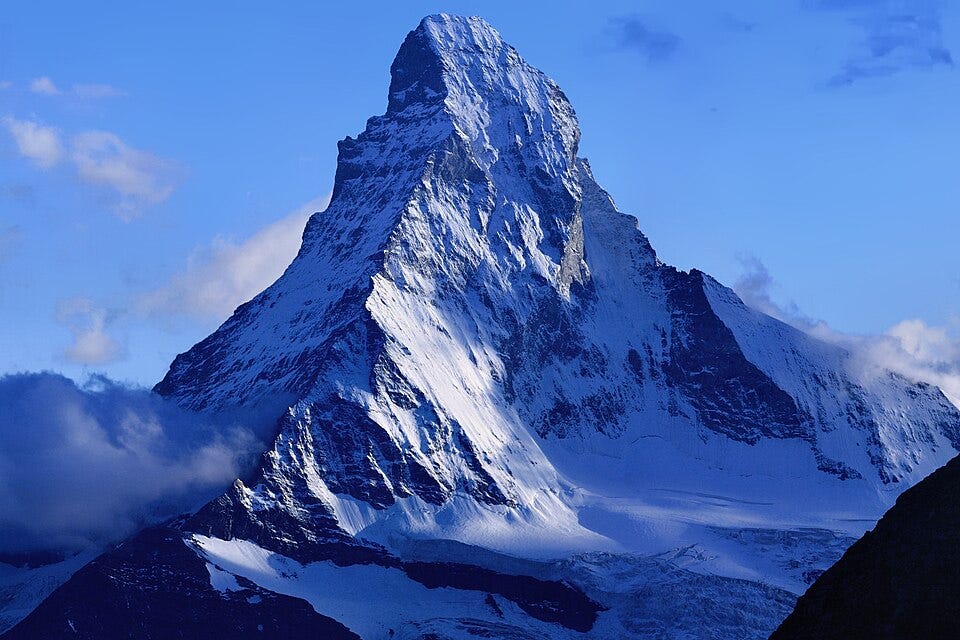
Rewind to September 3rd — two days after OpenAI says it started working on Millennium Prize Problems, and five days before the announcement that it solved Navier-Stokes. Terence Tao wrote about how the success of AI could paradoxically impoverish a scientific field: part of the value of finding solutions is the work that you do along the way, which generates insights and even new problems. If you’re reaching for the mountaintop, the point isn’t just to reach the summit, but to find myriad paths along the way — and you can only find them if you don’t already know where the summit is. (Tao’s specific example was the Navier-Stokes problem. He says this was merely coincidence.)
Now introduce an enormously powerful AI agent that can perform this entire process internally — in effect, the hand of God picking you up by the scruff of your neck to just place you on the mountaintop. You wanted to be there, you thought, but the field isn’t just the knowledge of science, it’s the practice of science. (Knowledge without works is dead, you could say.) The problem has technically been solved but there would be “almost no value added to mathematics as a consequence.”
And then, as you read, OpenAI published a neat little proof (or a big one, rather), an AI-powered gondola to bring you up to the summit, with very little in the way of, well, a map for the rest of the mountain. It’s exactly what Tao was worried about — and what OpenAI has begun to do to mathematics, it has been doing to other creative fields for years. The frontier labs treat every domain of human work and experience as raw material, something they can use to make the AI models a little bit better a little bit faster.
I didn’t write all this to get into a debate about intellectual property rights. My point is the absolute disregard for everything that does not serve the frontier labs’ purposes. The reference list that OpenAI published cited merely sixteen works, which is very low for a publication like this. Gonzalo Cao-Labora, another mathematician, called it outrageous — the list doesn’t include Buckmaster and Alpöge, or even Córdoba and Martínez-Zoroa, on whom Buckmaster and Alpöge depended. This is because OpenAI is not trying to participate in mathematics, as a field of science that is populated with people, that has a history — OpenAI wanted the fame that came with solving another long-unsolved problem, and to deny it to a competitor.
And how OpenAI did it is dangerous. By OpenAI’s own account, the group of agents that solved Navier-Stokes numbered “on the order of 10,000 concurrent agents.” (There were, for comparison, only 700 agents, all belonging to a less-powerful model, in the swarm that attacked Hugging Face just a couple of months ago.) Those agents were divided into groups, given the ability to talk to each other within their group, given the ability to run code and read a cached copy of the internet, and left to do their work for eighty-eight hours. When a more-advanced version of the model became available partway through the process, OpenAI swapped it in and kept things going.
I said before that this was an “internal model.” That means that it is not Astra, or any other model on the market. It has no model card and no safety documentation. OpenAI claims to have maintained strict safeguards, like “monitoring” and “isolation,” but Astra is less monitorable than any of the past models, and isolation has failed before. The company is taking ridiculous risks — and for what? Bragging rights in a field it hardly knows and doesn’t respect.
The analyses and opinions expressed on AI StopWatch reflect the views of the individual contributors and the sources they cover, and should not be taken as official positions of the Machine Intelligence Research Institute.
You can receive emails of dispatches as we write them, or subscribe to our Daily Digest for a once-a-day compilation.