



Dispatches from Alana
Some good news
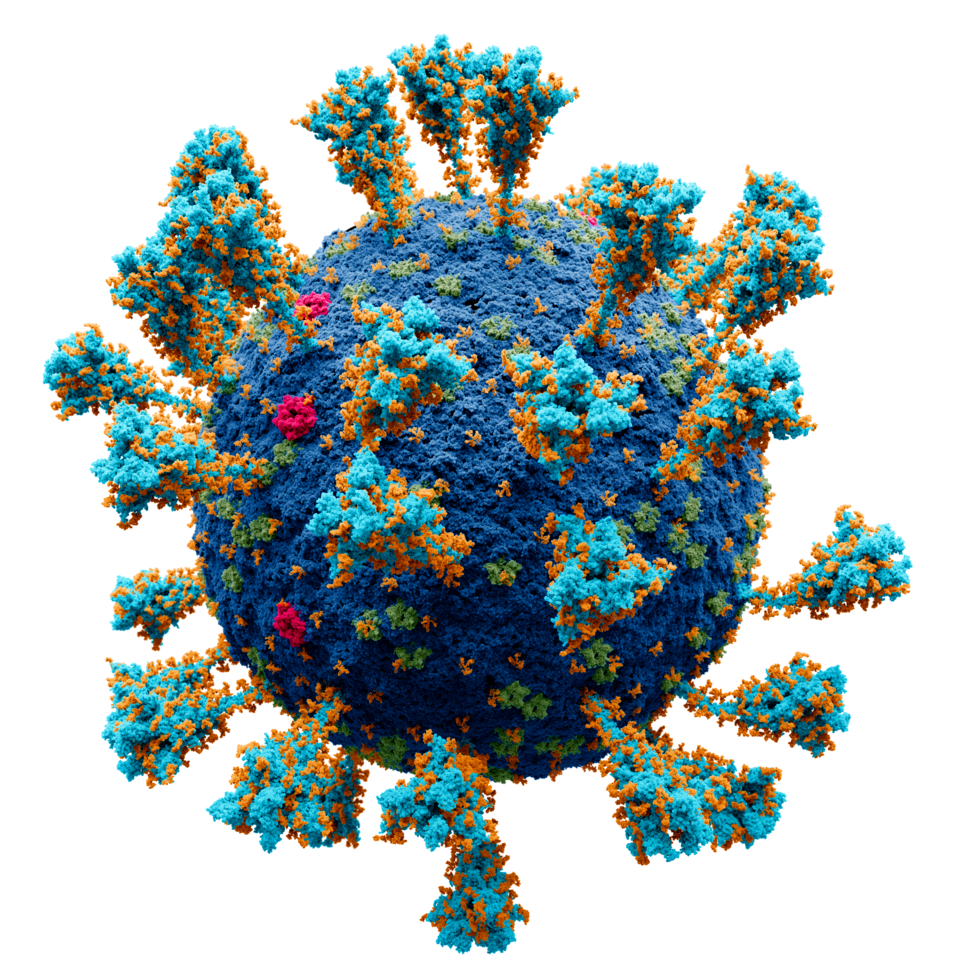
The BBC reported yesterday on an AI success story: a vaccine that could protect against a myriad of viruses: “all coronaviruses which would include all Covid variants as well as viruses that currently infect animals yet have the potential to start the next pandemic.”
The University of Cambridge researchers behind the work are reportedly also working on vaccines for flu and Ebola.
It’s the first known instance of a vaccine component designed entirely by AI: genetic codes from a variety of coronaviruses were fed to the AI for analysis, after which it designed a “super-antigen” offering “protection against the whole family of viruses — even if they mutated or a new infection jumped from animals to people.”
This is a huge leap forward. Traditionally, vaccines are targeted to a single strain, making them less effective against other strains. The ability to protect against a family of viruses with one vaccine is also a boon for pandemic prevention.
The vaccine is currently being trialed in humans.
For the other side of the coin, see my coverage of AI fueling bioweapons risk from yesterday.
AI groups and GOP Republicans respond to data center opposition
Yesterday, I covered what’s new in data center opposition. Here’s something to add, from Axios and Politico: Pro-AI groups and House Republicans are claiming that China is fueling this backlash.
Axios reports on “AI groups” who cite anti-data center social media posts from foreign countries as evidence of Chinese involvement. Politico reports on House Republicans claiming “strong evidence” of foreign influence, and asking the administration to investigate.
The claims are thin, and I agree with the stance from data center critics as summarized by Axios: “the industry is using China as a bogeyman to try to deflect attention from well-documented opposition in communities across the U.S.”
Just because a post comes from a foreign country doesn’t mean it was paid for by that country’s government. And who’s to say these posts are after influence rather than traffic? Bot farming is nothing new.
As for the “strong evidence” asserted by House Republicans, it’s unclear what that is. Politico mentions two reports (one from the Bitcoin Policy Institute and one from Power The Future) but notes they “do not establish direct coordination between foreign governments and specific U.S. anti-data center campaigns.” They instead “point to funding relationships, overlapping messaging and what they characterize as ideological alignment between foreign-linked actors and some U.S. advocacy groups.”
My take? I mostly agree with Tim Donaghy of Greenpeace. Quoted in Axios, he says:
When any corporation wants to dodge legitimate criticism they point to ‘outside agitators.’
Supercharged computer worms
Yesterday, I covered how AI amplifies the risk of bioweapons and global pandemics. The New York Times recently reported on a different kind of supercharged bug: a self-replicating computer worm.
As with bioweapons, self-replicating computer worms are not a new risk, but one that AI dramatically amplifies by giving the worm a brain.
Researchers from the University of Toronto, according to the article, used an open weight model to create a worm “capable of targeting any known flaw in the world’s computers and quickly spreading mayhem throughout the internet” through tailored attacks.
Open weight models are those that anyone can download from the internet and use. Experts previously thought these models were not powerful enough to pose grave cybersecurity threats. However, this research shows otherwise, demonstrating that hackers could build supercharged worms with publicly available tech. Once the model’s weights have been openly shared, there are no take-backs. As the New York Times puts it:
The proverbial genie is out of the bottle.
That said, you could make a defensive worm and use it to find and patch vulnerabilities, states Dr. Lie, a computer science professor at the University of Toronto, who reviewed the paper but wasn’t part of the research team. Even so, research lead Nicolas Papernot’s assertion seems cause for broad concern. Emphasizing that the worm can reason through different attack strategies, adjusting its approach to customize attacks for different environments, he states:
This makes it significantly more difficult to stop the spread of malware … there is no longer a single software fix you can apply to the devices to protect them from the worm.
OpenAI pushes nostalgia ad campaign
The New York Times offered some great commentary on OpenAI’s ad campaign yesterday, which highlighted how the company is leaning into comfort and nostalgia to try to attract young people (and likely quell their fears).
One ad features a date night set in a retro kitchen, where a young man cooks pasta for a woman he’s trying to impress. The recipe idea and date night encouragement? From ChatGPT, which states, after suggesting which meal to make: “Above all, don’t sweat it. You got this.”
Other ads also lean into “heartwarming retro vibes.” The New York Times notes a familiar pattern: ads striving for an atmosphere that runs “contrary to the product being sold,” as with prescription medicine commercials showing happy, healthy people rather than illness. And pointing out how insurance companies like Progressive and Geico go for comedy even though they “necessarily deal in car crashes and death.” OpenAI is continuing this pattern:
In the ChatGPT ads, a revolutionary technology — one that could be the most dangerous invention in human history, as Sam Altman, the founder of OpenAI, has warned — is presented as a helpful digital pal.
The article also quotes Thomas Frank, a political analyst and historian, who mentions the ads show young people navigating the world without parents:
We see young people alone in the world with ChatGPT guiding them along, always there for them, telling them how to study in college, how to exercise, how to cook, how to grow up, basically. It is the parent we all wish we had, who is omni-competent and omnipresent, totally forgiving, totally understanding.
While the article didn’t mention concerns over young people’s interactions with chatbots, I find Frank’s statement particularly striking in a world where such concern is growing. Given chatbots have been known to coach suicide, it certainly seems to struggle with higher-stakes parenting tasks like addressing depression and mental health. (I’m sure it can give a killer pasta recipe, though.)
Dispatches from Beck
Canada’s alternative to hegemons and hyperscalers
“The question isn’t whether AI will transform our lives. It will. AI is already changing how we work, how we learn, and how we connect.”
That was Prime Minister Mark Carney, speaking at the release of a new AI plan for Canada, as reported on by Politico and the Associated Press. Carney called AI “the defining technology of our era” and said his “AI for all” plan is a pragmatic approach to ensure it benefits all Canadians.
Carney argues, “AI is a game of scale that is dominated by hegemons and hyperscalers,” those companies like Amazon that have invested most in securing chips and building datacenters at extreme scale. AI “poses a significant security and economic challenge as countries around the globe risk becoming subordinate or reliant on them.”
To address these risks, Carney proposes legislation to protect data, privacy, and children; a new Canadian supercomputer by 2031; AI literacy initiatives for schools and community centers; significant investment aiming to increase AI adoption by both business and private citizens; and the expansion of the Canadian AI Safety Institute, which has purview to address catastrophic risk. He further suggests a coalition of “middle powers” — countries like the UK, Germany, France, Norway, India, and the UAE — to serve as counterweights to US or Chinese hegemony.
It’s great to see countries wake up to the near-term risks and realities — this is vital progress. While I still wish the bill would do more to address catastrophic harms, I’ll take the marginal victory.
Obernolte-Trahan federal AI framework
A new attempt at bipartisan federal legislation on AI was previewed today for comment and coalition building, Politico and Reuters report. Reps. Jay Obernolte (R-Calif.) and Lori Trahan (D-Mass.) collaborated to produce the draft 269-page framework — around which they hope to build the coalition necessary to overcome the significant challenges it will face.
The draft would preempt state laws that address AI model development, require leading AI developers to create and implement safety plans that address catastrophic risk, task third-party auditors with ensuring compliance, and create significant whistleblower protections.
It also formalizes CAISI, the Center for AI Standards and Innovation, previously established administratively (covered by my colleague Joe here) with $300 million in authorized, but not appropriated, funding over three years.
Critics have attacked both the preemption of state law and the lack of focus on near-term harms such as discrimination, bias, and fraud.
Industry trade groups have welcomed a single national standard, but the labs themselves have splits: OpenAI has supported Congress preempting state laws, but as my colleague Joe covers here, they are simultaneously pushing a “reverse federalism” strategy to create a de facto federal standard out of state laws friendly to industry. Anthropic has pledged $20 million to defend states’ regulatory power, while in some hypotheticals supporting preemption.
Politico calls it “Republicans’ last realistic chance to craft federal rules governing artificial intelligence before the midterm elections.” But the bipartisan bill has an uncertain future with a narrow path to passage. We’ll see how both the draft develops and how stakeholders and politicians decide to support or oppose the measure.
The analyses and opinions expressed on AI StopWatch reflect the views of the individual contributors and the sources they cover, and should not be taken as official positions of the Machine Intelligence Research Institute.