

Dispatches from Mitch
More demand than ever for the Jevons paradox
There’s a genre of AI discourse, popular in 2026, built around the idea that your job is not only safe, but will be in more demand than ever. You can find a typical specimen in today’s Washington Post; this one is about lawyers, but if you would like it coding flavored, or radiology flavored, we’ve got you covered.
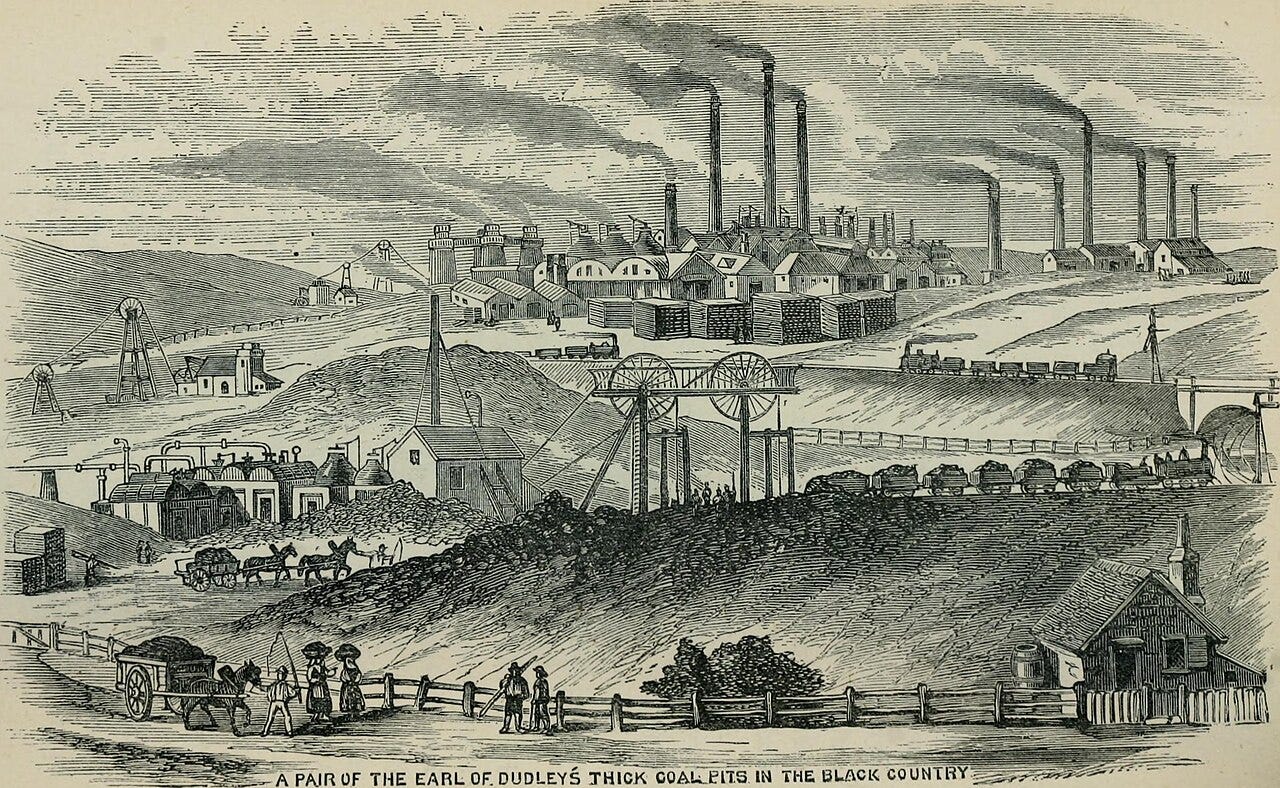
A common element in these pieces is an appeal, sometimes by name, to the Jevons paradox. In the early 1860s, economist William Stanley Jevons argued that demand for coal in England wasn’t going to fall as a result of efficiency gains in engines and furnaces. Instead, he predicted the opposite: that by making coal a more efficient fuel, these advancements would make coal power viable for many more uses, greatly increasing demand. He was right.
What does this have to do with lawyers, coders, or radiologists in 2026? Well, all three jobs are highly exposed to AI — the bots can do at least parts of them faster, cheaper, and even better than humans can. The writers holding up Jevons as a shield argue that by making those services cheaper, AI increases demand for them.
The current jobs data says they’re right — to a point. But as a career saver, the principle described by Jevons has limits these pieces tend to leave out.
For one, it is the demand for the product or service that goes up as price declines, not its manner of production. That is, demand for legal services goes up, not demand for lawyers. It’s software you want, not coders. Radiology, not radiologists. If the service becomes obtainable without a human in the loop, there’s no protection for the human.
In fact, the comments section for today’s piece about lawyers includes a number of testimonials about using chatbots for legal work instead of a human lawyer. We see the same thing in software: Non-coders can now sometimes vibecode their own tools. Score one for the radiologists, though: For some strange reason, home mammography doesn’t seem to be catching on.
The other big reason you can’t count on Jevons to save your career is that there is probably a hard ceiling on how much demand can exist for your product or service at any price, and it might not be much higher than it is now. Thinking like a customer, would you be eager to crawl into an MRI every time you stub a toe? Would you want to lawyer up over every small dispute? Would you commission custom software for every one-time task?
Maybe? Demand for some of these things could grow significantly if the price gets low enough, but a price that low implies that there’s no longer a human in the loop.
Also, AI capable enough to make existing services cheap may render some of them moot. What if demand for medical care plummets because of breakthroughs in preventative medicine? What if AIs just do your computer tasks directly, skipping the step of anyone writing code?
And yes, we have to think about what happens when AIs can just cut all the humans out of all the loops, forever.
So don’t count on Jevons. Today, we take more photographs than ever, but my father’s old job in the chemical film processing industry is long gone. I look around and don’t see many switchboard operators, town criers, or bowling lane pinsetters. I think I saw a chimneysweep once, but the efficiency gains of the portable compressor have failed to save the chimney itself.
I’ll give Jevons this, though: Punditry invoking his paradox has never been easier to produce, and demand is through the roof.
More boos at graduation, more cheating on campus
A couple of media items today have me wishing I had waited before putting out Friday’s education-related dispatch. That’s the one where I covered evidence of AI-assisted cheating at college, and the way Gen Z graduates booed a commencement speaker for bringing up AI.
Well, booing about AI seems to have become a meme. Here is former Google CEO Eric Schmidt being booed every time he mentions AI during a commencement speech at the University of Arizona.
As for widespread cheating: Theo Baker, a student journalist graduating from Stanford this year, vividly describes his experience of it in a New York Times op-ed.
The class of 2026 is the first to have been ChatGPT native, as it were. They were freshmen when the chatbot was first released in November 2022.
In Baker’s telling, cheating was already ingrained in Stanford culture even before you could just “ask Chat”, so ChatGPT was gasoline on a fire. Now, “Cheating has become omnipresent. I don’t know a single person who hasn’t used A.I. to get through some assignment in college.” Forty-nine percent of computer science majors responding to a survey said they would rather cheat on an exam than fail. Baker watched a fellow student sign a declaration that he didn’t use ChatGPT on an assignment while having ChatGPT open in the next window.
In response to such trends, Stanford, like Princeton, has brought back blue books and proctored, in-person exams.
Baker blames money for much of the rot at Stanford and other “corporatized” universities. Students are often courted for lucrative opportunities long before they graduate, making coursework an annoying sideshow to be waved away using any tool available.
He concludes by recognizing that this was an unusual time to be a student — a time when AI started to matter, but not yet the era when “humans have no monopoly on intelligence.”
Keep calm and blow the whistle
If you don’t know Daniel Kokotajlo, he’s the former OpenAI researcher who left the company as a whistleblower in 2024. On his way out, he refused to sign a secret non-disparagement clause. That could have cost him roughly $2 million in equity.
Fortunately for Kokotajlo and other former staff, part of his whistleblowing was about these secret clauses, and he was heard. With the help of some investigative reporting by journalist Kelsey Piper, his revelations shamed the company into changing their exit policy.
The other part of his whistleblowing was about how the company was “recklessly racing” to build AIs that could rival humanity.
Kokotajlo now leads the AI Futures Project he cofounded. This is the non-profit research group responsible for last year’s influential AI 2027 forecast scenario. That forecast has come up a couple times here on AI StopWatch.
All this is to say that Kokotajlo is a solid dude, and I can enthusiastically recommend you give a watch or a listen to this new 32-minute YouTube interview he did for Business Insider. My recommendation is only slightly diminished by my dislike of the editing style, which cuts out the interviewer and jumps between topics too much for my taste.
Please know, going in, that people warning about the AI extinction threat are in an unfair bind. When they seem overly calm, they can be accused of not believing what they say — for it’s the kind of warning that ought to be worth freaking out about. But when an alarm-sounder gets emotional, they can be accused of being crazy or irrational.
Kokotajlo is cool as a cucumber, but don’t let that fool you. In the default ending to his forecast, “a successor species displaces us and it’s not loyal to us [...] it does to us what we do to the rainforest.”
Here’s what he had to say about why nobody seems to be panicking:
I think what’s going on, ironically — the reason why people aren’t um running around panicking — is because people don’t actually believe that these companies are telling the truth when they say this.
If people actually believed that one or more of these companies was going to build superintelligence in the next few years, that would be incredibly disruptive and there’d be people running around in the streets screaming, right?
The analyses and opinions expressed on AI StopWatch reflect the views of the individual contributors and the sources they cover, and should not be taken as official positions of the Machine Intelligence Research Institute.