


An article in TIME by Billy Perrigo today provides a hopeful profile of a company working on a niche technology that may help save the world, but mostly encourages me as evidence that journalists are chasing the right stories.
Last month, more than a thousand employees of frontier AI companies declared that they wanted the government to work with industry to build the governance mechanisms needed to make a global AI slowdown viable. In our coverage, I pointed out that there has already been considerable research in this direction, but Perrigo’s article is the first I’ve seen to actually look into the supporting technology.
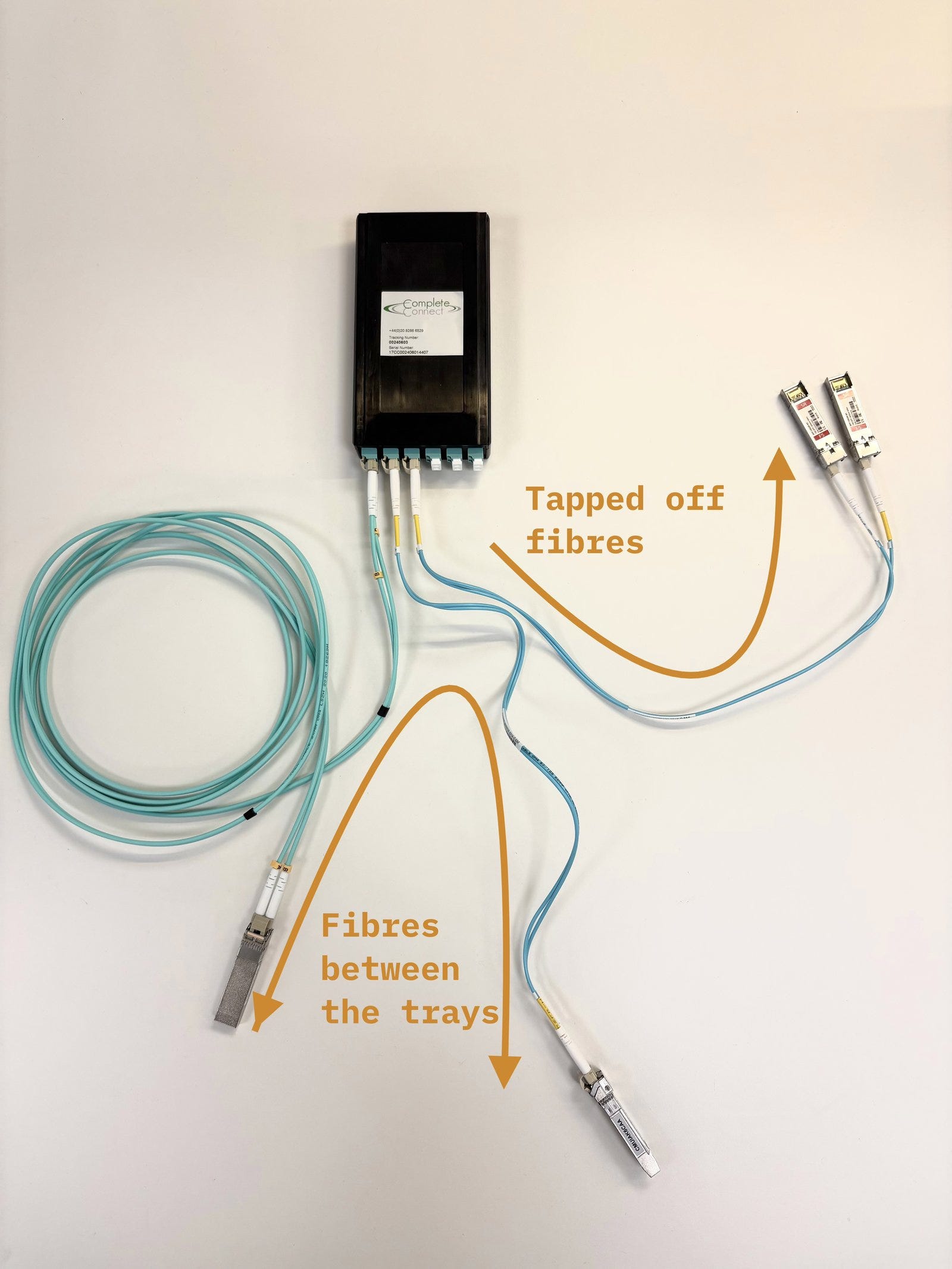
The company he profiles is Amodo Design, based in Sheffield, England. With mostly academic and non-profit funding, it is working on an AI verification system that would allow data center operators to prove their chips are only being used to run existing AI models rather than train new ones, and even to prove which model it is running.
The verifier is a pair of systems, one at the data center, and one for a monitor. The monitor’s version samples and reruns data fragments from the data center’s version, confirming that the AI being run is the one claimed.
The system still needs work to handle encrypted data, and currently requires between one-fifth and one-third the computing power of the AI model it is monitoring. And like most verification systems in development, it would require retrofitting existing data centers. But future iterations are expected to be much more efficient, and retrofitting would be a very surmountable obstacle for governments that start treating the race to superintelligence with the same seriousness as nuclear arms control. Arms treaties, the piece points out, have made use of monitoring technologies “like satellites and seismometers.”
This field looks shamefully under-resourced. Amodo’s CEO Tom Milton estimates that fewer than 50 engineers in the world are working full-time on verification technology. He employs 9 of them. “It is insane for us to think that we are even a noteworthy participant in this, let alone one of the largest projects.”
Perrigo concludes his piece by looking at whether an AI slowdown agreement is politically possible. Quoting an August recommendation from the Institute for Progress, he writes: “Better verification technology would unlock a broader space of possible agreements.”
The analyses and opinions expressed on AI StopWatch reflect the views of the individual contributors and the sources they cover, and should not be taken as official positions of the Machine Intelligence Research Institute.