


A decade ago, hardly anyone dreamed that AIs would be writing poetry while struggling with basic arithmetic. The advent of large language models flipped that script for a time; in 2020, GPT-3 was doing just that. But the math is back, with a vengeance, and it brought friends. Automation now threatens a wide range of roles, and the sheer diversity of that threat has a great deal to teach us about the capabilities of artificial general intelligence.
Today, mathematicians are seriously talking about losing their entire field to AI. In the wake of several groundbreaking mathematical milestones reached by AI, the Washington Post covers a day-long summit about the future of math. In one talk, University of Toronto professor Daniel Litt argued there’s a chance “human expertise in mathematics is totally lost.” MIT researcher Drew Sutherland added that it might not stop there:
These capable intelligences are going to be applied elsewhere and to other fields. And maybe we’re just the canaries in the coal mine that it’s coming for the mathematicians first.
I suspect Sutherland has come to understand an important fact about AI capabilities: AI is getting better at everything, but not at the same rate. This is a further illustration of what’s been called “jagged intelligence.”
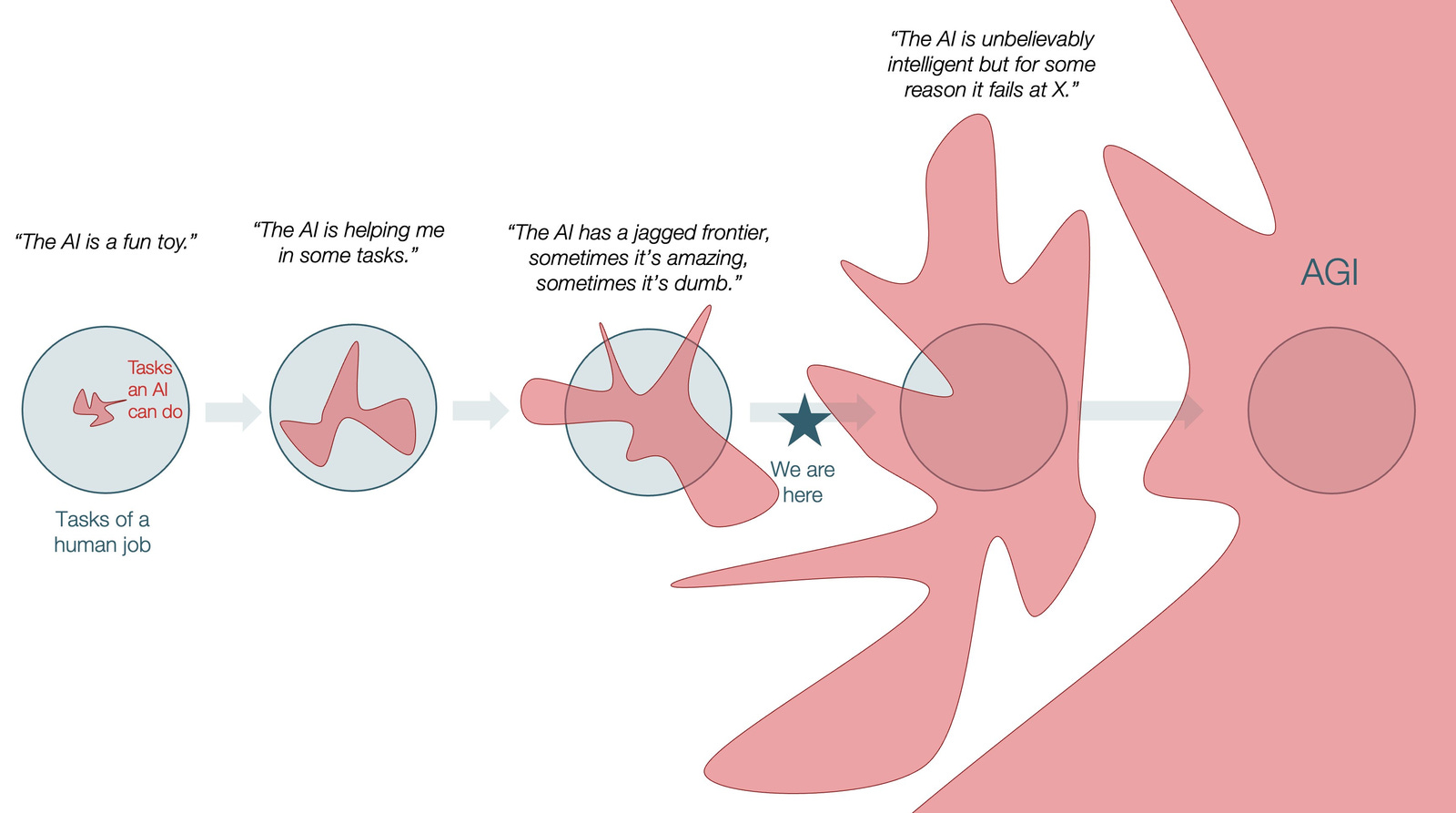
One example of this jagged intelligence at work: Anthropic recently announced progress made by its AI, Claude, in life sciences. Specifically, Claude designed hundreds of new “minibinders”, small proteins that attach to specific target proteins, like connectors for life’s building blocks, and it matched fully equipped human experts in analyzing the content of a chemical sample. The protein design looks like the bigger result, with Claude having found roughly half as many minibinders in this effort as humans have to date. But automating a days-long chemical analysis in under half an hour is nothing to sneeze at, either.
As developers train larger models on new datasets, AI capabilities expand in jagged spurts. Some, like Anthropic’s chemistry progress, make a certain amount of sense when you consider the training data (though the exact rate of progress is still unpredictable). Other capabilities, like social engineering or inducing psychosis in the vulnerable, come as a nasty surprise.
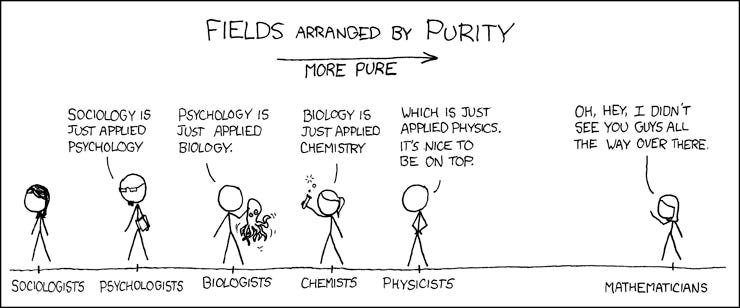
A decade ago, I might have naively expected that AI progress would advance along a predictable track, starting with logic and “pure math” and passing up through physics, chemistry, biology, and eventually psychology, medicine, law, and other messy fields. After all, it’s what sci-fi has primed us to expect of machines. But as often happens, reality has proved weirder than fiction.
In any case, Sutherland is right. AI is already encroaching on fields besides mathematics — like, say, medicine. As reported by Axios, an article in the Journal of the American Medical Association (JAMA) suggests that AIs may soon exceed doctors in many aspects of medicine.
Generative AI “rivals or outperforms” doctors at five cognitive medical tasks, the piece argues: gathering patient information, making diagnoses, selecting tests to establish a diagnosis, prescribing appropriate treatments and managing chronic diseases.
A day later, the AMA and the Digital Medicine Society published a framework covering roles they consider “fundamental to the profession.” I notice a concerning brevity and vagueness in their list of indispensably human responsibilities, and I wonder if next year’s framework will be shorter and vaguer still.
This week alone, we’ve seen several more fields visibly threatened by AI. Today, the Guardian described AI’s growing use in human resources and hiring. Even physical tasks are not exempt, as Reuters and others discuss the latest logistics, manufacturing, and service demos from Chinese robot makers: moving and sorting boxes, packaging phones, and handling household chores.
Meanwhile, Bloomberg catalogues some of the options that are being proposed for after AI replaces all the jobs, like AI dividends or basic income for all.
My own views here are somewhat conflicted. High-quality work in any field is usually a good thing, whether that work is done by machines or humans. But not all AI outputs meet that bar, and a proliferation of slop serves no one. And for various reasons, the end state of the trajectory we’re on does not look very human at all.
Increasingly, though, people seem to be realizing that they need not stand helplessly by while their careers succumb to automation.
A mathematician friend of mine, Xiaoyu He, has taken the alarm in his own field as an opportunity to warn his peers about the threat of extinction AI poses, urging them to turn their attention to understanding and steering the minds of AIs. I commend his initiative and drive.
For my part, I normally recommend that those interested in the future of AI set their sights instead on policy or technical governance, or simply follow Xiaoyu’s example and share their own concerns with their peers.
The analyses and opinions expressed on AI StopWatch reflect the views of the individual contributors and the sources they cover, and should not be taken as official positions of the Machine Intelligence Research Institute.