

In this issue:
Economists say we must act now on AI - Statement reflects major update for field where gradualist predictions have dominated
AI-induced inflation on Federal Reserve’s radar - Price hikes originating with memory chip demand are expected to factor into upcoming interest rate decisions
No choice, your voice can take me there - An AI cover of a Madonna song is topping the charts in Australia and teaching us about “compulsory licensing”
What’s your price? - Payouts in Pennsylvania can serve as a warning that recalls our colonial past
Dispatches from Mitch
Economists say we must act now on AI
Statement reflects major update for field where gradualist predictions have dominated
The top AI story in major media this morning was a short statement signed by nearly 200 economists, researchers, and tech leaders warning that We Must Act Now to “understand the economics of transformative AI” and build the capacity to steer it in a direction that will be good for society.
Signatories include the chief economists of OpenAI and Anthropic, and 15 Nobel laureates.
The statement says AI could be more transformative than the Industrial Revolution, but “unfolding over a vastly shorter time frame.”
If you squint, you might convince yourself that the risk of human extinction is somewhere in the statement. But this requires assuming that the word “risks” in the line, “It could bring risks, including large-scale job displacement, as well as opportunities such as major gains in living standards,” is doing a lot of work.
Still, for the field of economics as a whole, this is a pretty big update, and to its credit. Economists have historically preferred to view AI as a normal technology that will take decades to diffuse and will manifest as modest-but-steady growth in productivity and GDP.
Cracks in that gradualist consensus have been visible for a while, though, with more leading lights daring to ask, “What if this time is different?” Two of the statement’s top signatories, Daron Acemoglu and David Autor, were on a podcast with comedian Jon Stewart in April that I thought was pretty insightful, insofar as you believe the economic impacts of AI are the principal shock we need to worry about.
AI-induced inflation on Federal Reserve’s radar
Price hikes originating with memory chip demand are expected to factor into upcoming interest rate decisions
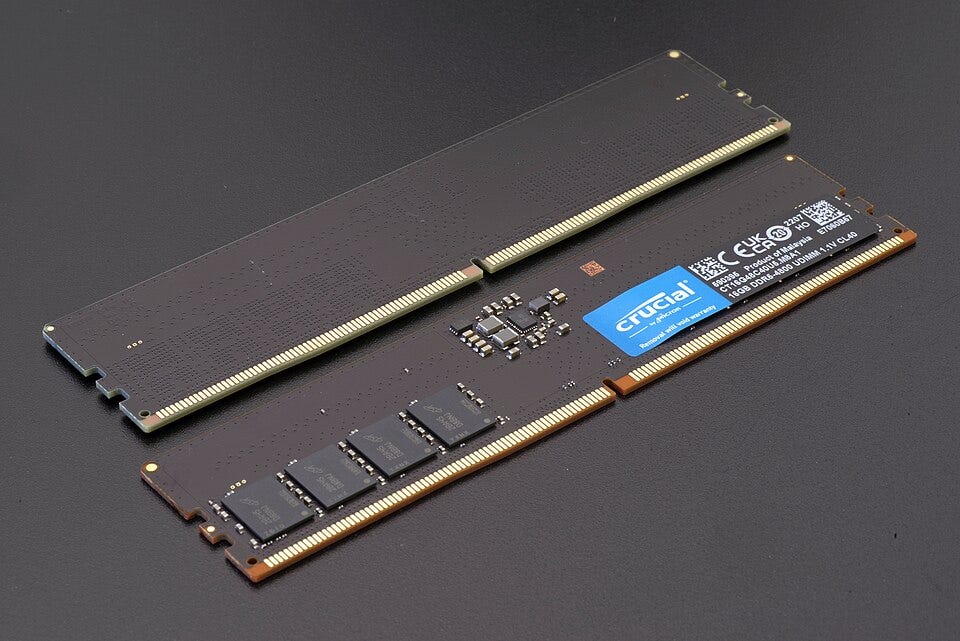
Since coming down from the post-pandemic price shock, inflation in the U.S. has mostly been a multicausal phenomenon — a bird flu here, a war in the Strait of Hormuz there. Over the past year, we’ve seen the AI buildout become part of that mix, first driving up the price of memory chips more than 400%, and then forcing price hikes in consumer electronics that need those same chips.
Now, the ripple effects of AI-induced inflation are widespread enough to be on the Federal Reserve’s radar. According to an Associated Press article today, Fed officials are said to be considering AI among other factors that might warrant an increase in interest rates to cool demand and bring prices down.
Recent price hikes by Apple have served as a barometer for AI’s inflationary footprint. A top-of-the-line MacBook is set to cost $1,999 now, up from $1,699.
But everything from phones to game consoles has been affected. When consumers balk at the higher prices, sales drop, causing more pain. The head of Microsoft’s Xbox division called the components shortage “the most severe hardware crisis in history” in an email announcing mass layoffs, according to CNN.
One analyst told CNN he expects it to be at least a year before prices come down, and that it could get worse before it gets better. “We should start thinking about a $1,500 iPhone instead of a $1,000 (or) $1,200 iPhone,” he said.
No choice, your voice can take me there
An AI cover of a Madonna song is topping the charts in Australia and teaching us about “compulsory licensing”
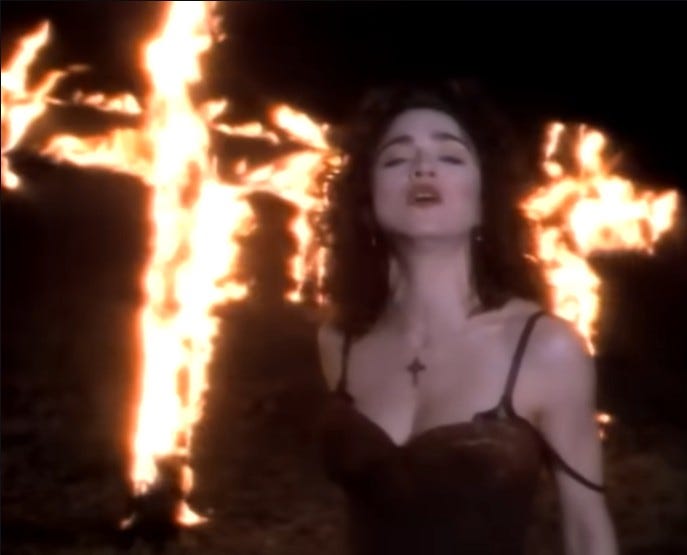
Two things are clear about the song at the top of the charts in Australia right now, with some 35 million Spotify streams: 1) It’s a cover of Madonna’s “Like a Prayer.” 2) It is almost certainly AI generated.
I’m ignoring this as a milestone for AI slop (at least, it sure sounds like slop to my ear) because I was curious about the copyright implications and did a little homework.
When a music artist’s song is covered by another artist, they are entitled to royalties from revenues earned by the cover. In the U.S. and Australia, among other places, there is a “compulsory licensing” provision that allows anyone to release a cover song, so long as they pay the royalties.
So if you’re Madonna, you can’t shut down this song just because it grosses you out. (She hasn’t publicly commented on it, but recently called the use of gen-AI in music the “complete opposite of making art.”) But if you’re Madonna’s publisher, you will for-sure be expecting your royalty payments.
Naturally, I have questions I’ll be keeping an eye on:
Will the inability to prevent people from legally making AI-generated covers of one’s songs have a chilling effect on artists, making them reluctant to release new works outside of live performance?
Will artists try to optimize their work for being easy for AI to make catchy covers out of?
Will the public wise up to AI covers and stigmatize them?
In the likely event that AI covers are stigmatized, how long will it be before a top artist sues the humans behind an AI cover on grounds that its existence constitutes defamation? Who will it be?
I welcome your predictions in the comments.
What’s your price?
Payouts in Pennsylvania can serve as a warning that recalls our colonial past
I was weirdly captivated by a Wall Street Journal piece from Will Parker this morning about 96 families who sold their land to data center developers in Salem Township, Pennsylvania. Did they strike it rich, or did they sell out their community?
It depends. Do you belong to one of those 96 families? Congratulations! Your long-suffering toil — your decades spent struggling and mostly failing to eke a mediocre living from the produce of your land — is finally being rewarded, and your rest is at hand. If you’re like Marilee and David Kiliti, the couple whose profile makes up the heart of this piece, your 89 acres have just fetched $22 million and you’re busy with the plans for the hot tub on the upper deck of your “barndominium” dream house. (Mr. Kiliti describes it as “Nothing crazy.”)
Do you belong to some other family in the area? Well, perhaps if you had let the Kilitis build that very large hog barn you blocked a while back, the choice wouldn’t have been so easy for them.
What’s that? You only moved into the area recently, like one of the three people a local knows who came to town to get away from data centers elsewhere? Maybe you can score one of those 50 permanent jobs the Kilitis say will remain after the 1,500 construction jobs run their course. And think of the township tax coffers!
I write in the second person because I’m inviting you to put yourself in the Kilitis’ shoes and ask what your own price would be. I suspect mine would be well under $22 million, and that I would tell my neighbors that the data center is probably still more pleasant to live around than the giant hog barn would have been.
My point isn’t that everyone has a price, but that AI will pay it. For most people, it won’t even be a difficult decision. A future where AI doesn’t kill us outright can still go very badly for our species because of gradual disempowerment happening one family, one screaming deal, at a time.
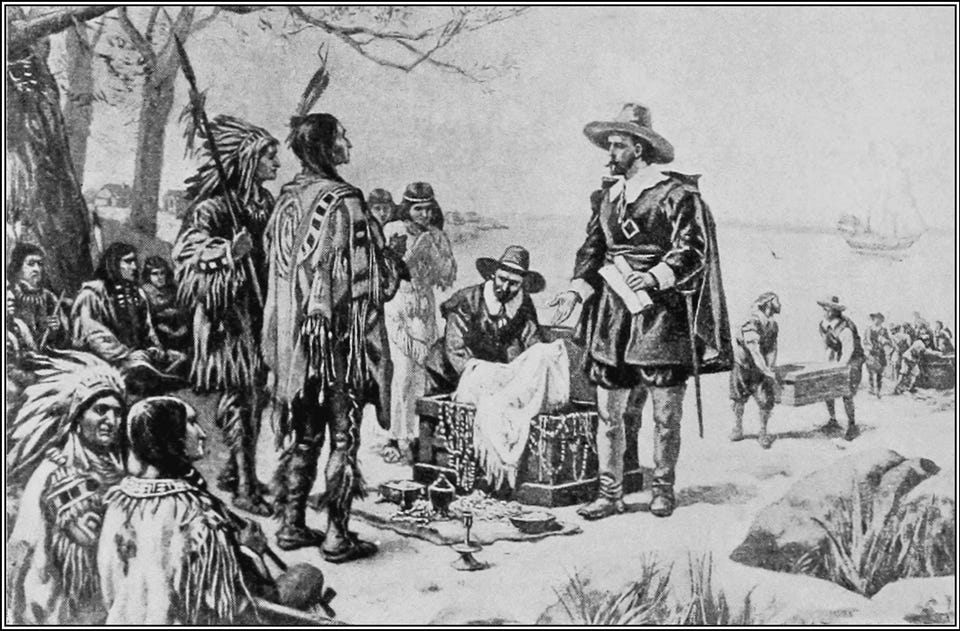
Do you remember learning in school about how Native Americans sometimes sold their tribal lands to European colonists for a trunkful of glass beads? At the time, you may have felt like this was really stupid of them. But if you went back and thought about it as an adult, putting yourself in their shoes with a better understanding of the context, the choice probably made more sense to you: In the long run, the Europeans were unlikely to take no for an answer. Why not take the peaceful payout and walk away with your family and your people intact, to enjoy the rest of your lives in relative ease?
But then, you, the adult student, may have stepped back again, and found yourself more angry than ever at the exchange. The Europeans deprived future generations of natives of what might have been their inheritance by finding the price of the generation in charge at the time. And to the Europeans, that price was cheap — an insult, when viewed from the outside.
If you see the same power imbalance at play in Salem Township, extrapolate it forward. In the short term, AI will have more profitable uses for our land and resources than we do, and will thus continue to separate us from these with truckloads of money.
In the medium term — which might only be a few years away, at this rate — the AIs or their nominal owners could have such an edge in technology and political power that they won’t have to take no for an answer. At that point, our planet will no longer be ours. For us, it’ll be the reservation if we’re lucky: The glue factory is more likely.
Even a $22 million payout for every family would be an insult, if we could see it from the outside — if we could see the cosmic inheritance being finessed away from our wiser selves and their potential descendants.
But even knowing this, I worry that I would take the payout. Collectively, I think we need to be humble enough to recognize that we as humans are vulnerable to this kind of attack, and avoid inviting a new kind of colonist — fantastically wealthy, technologically advanced, and superhumanly persuasive — to settle on our shores.
The analyses and opinions expressed on AI StopWatch reflect the views of the individual contributors and the sources they cover, and should not be taken as official positions of the Machine Intelligence Research Institute.