


In this issue:
Russian drones found to have been guided by AI running on Nvidia chips - The escalation may have minimal short-term impact, but the wider implications are troubling
The back-to-school tide of AI angst returns - ‘Tis the season for screw-ups, knee-jerks, and ruminations
Dispatches from Mitch
Russian drones found to have been guided by AI running on Nvidia chips
The escalation may have minimal short-term impact, but the wider implications are troubling
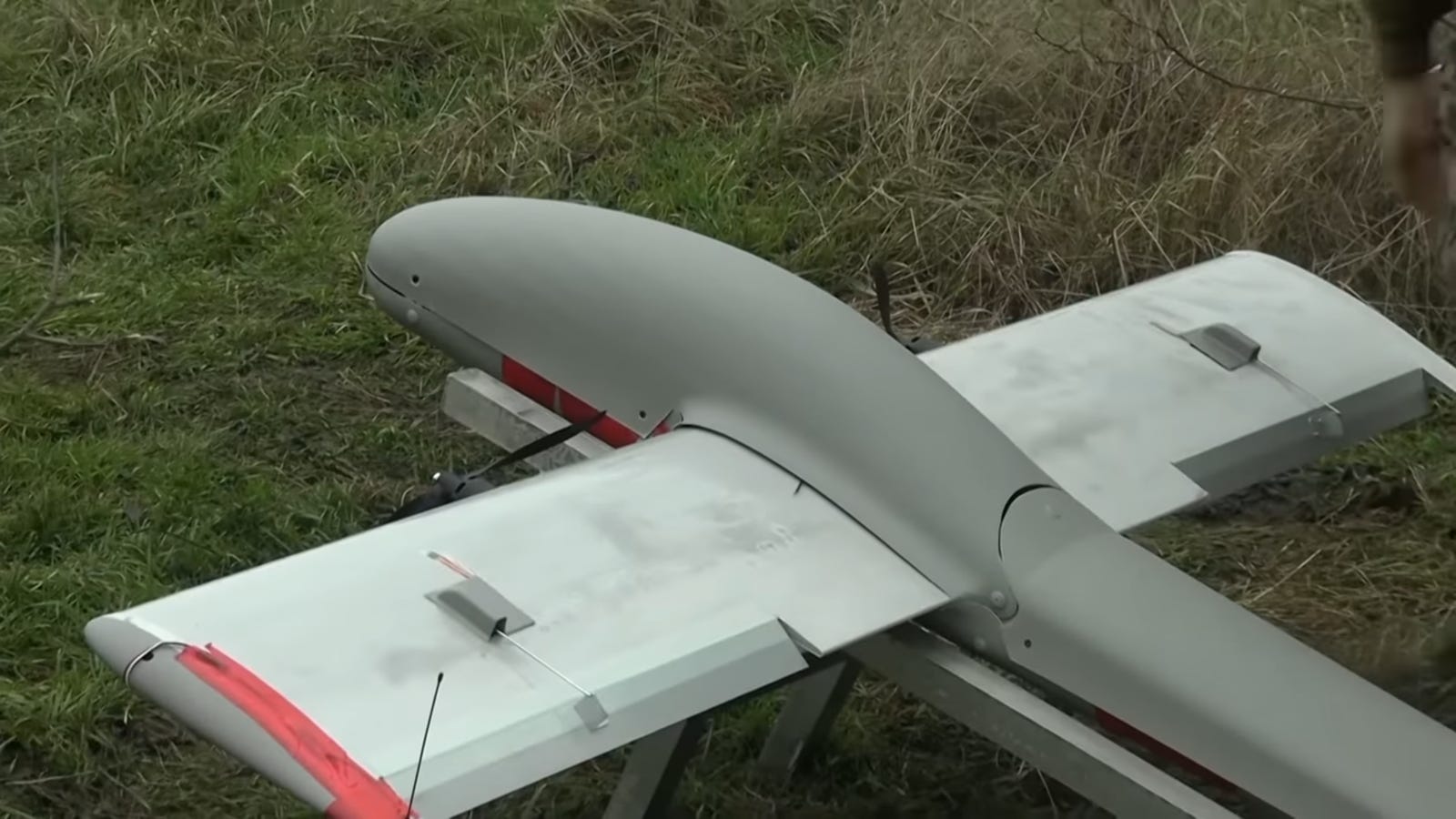
#/media/File:Molniya-2.png)
The New York Times reported today that Russian attack drones used in a coordinated strike last month in Ukraine were found to have contained Nvidia chips commonly used in robotics to process camera feeds and run small AI control models. The small fixed-wing drones, said to have contained unencrypted images of the types of propane tanks around a gas station they seem to have been aimed at, may be the first hard confirmation that the war has escalated to a new tier of weapon autonomy. In this tier, humans designate only a target area and the type of target they are interested in, and it is up to the weapon to identify and select its mark once it gets a close look at the neighborhood.
This advancement may not yet be a huge leap over traditional “last mile” targeting systems developed as far back as the 1980s, which share AI guidance’s chief benefit of being immune to electronic jamming. But I suspect AI-enhanced versions will be better at overcoming target concealment and perhaps at getting around obstacles like the anti-drone netting that has become a fixture in Zaporizhzhia, the site of the Russian strike.
They may also be better at operating in a swarm, spreading warheads across more targets and simultaneously diving at them from multiple angles. This was probably not a feature of the half-dozen or so Russian drones used in the July attack, which may not have needed visible antennas to coordinate with each other at close range but were also said to not be emitting radio signals. In theory, I can see ways drones might coordinate purely by visually observing each other, much as flocks of birds do. But the expended drones seem to have been pretty rough and minimal.
The Times journalist behind the piece, Andrew E. Kramer, deserves a nod for understanding the fundamental trade-off of machines directed by the kinds of neural-network-based AI that dominate the field today:
While traditional software follows step-by-step rules written by a person, an A.I. system derives its own rules by finding patterns across enormous amounts of data, a process called machine learning. That allows it to manage unanticipated situations. It also means no one can fully predict what it might do.
That uncertainty becomes an extinction-level concern once models are more cunning than humans. In today’s autonomous weapons, it’s a source of potential war crimes. One of the drones in the Zaporizhzhia attack killed three civilians when it struck an apartment building near its likely intended target.
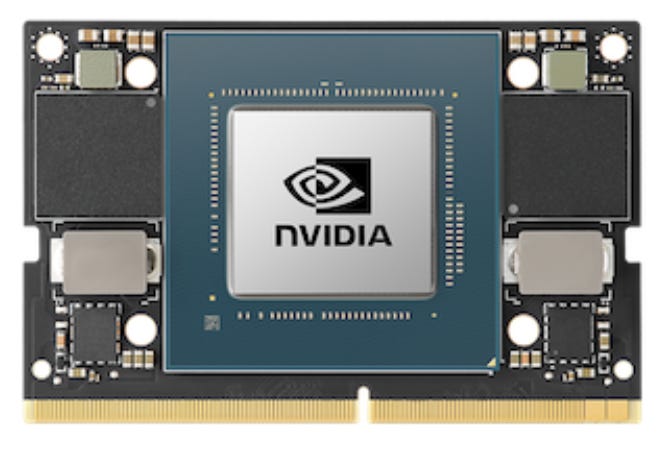
The investigation appears to have benefited from at least one drone that did not explode and was recovered mostly intact. The Nvidia chip inside was a Jetson Orin, which costs only a few hundred dollars. The company says it doesn’t sell these in Russia, but that they are widely resold on the open market.
I worry that cheap AI-powered drones like this will become a weapon of choice for terrorists and Iran-style rogue states, because the kinds of high-value soft targets that a small drone can knock out are going to be hard to defend against jam-proof weapons that can defeat netting and concealment. The inner line of hard-kill defenses against such threats is literally hit-or-miss, usually amounting to guy-with-a-shotgun.
The commander of air defense in Zaporizhzhia thinks he knows where this technology is headed:
This is a risk for the whole world. In a few years, we will be living in a ‘Terminator’ movie. It’s no joke. Machines are making decisions to strike.
The back-to-school tide of AI angst returns
‘Tis the season for screw-ups, knee-jerks, and ruminations

With many students starting the fall term, I’m seeing a familiar tide of seasonal dismay come in about what AI is doing to school and about what students ought to be learning while they’re there. There are waves to this tide, akin to the stages of grief.
First to come in are obvious screw-ups, like the Kentucky school that charged families a $10 instructional fee for work packets full of nonsensical slop. Check out the New York Post’s coverage of that to see the U.S. map with states you’ve never heard of, like New Mizone, Lookoong, and Venucky. As a bonus, you can see the periodic table where Magnesium has a negative atomic mass, and the solar system chart with a description that reads:
Planetary distance are temporatory earth, equater the elenonts and regnestiom org toed dishligns.
(To be clear, I’m holding this up as a school screw-up, not an AI screw-up, because today’s premium models are better than this; users who go even a little beyond the free tier, and who check the outputs — or at least have other models check the outputs — don’t end up with this kind of egg on their face.)
Next to come in on the back-to-school tide are the knee-jerk responses to such embarrassments: parent-choice advocates saying they should be able to opt their kids out of AI instruction. This year, that includes Education Secretary Linda McMahon. Asked about this on CNN, she said:
I certainly think that parents should be very much involved in their children’s education. If they’re going and they’re involved and they are looking to see what is happening with their child, I think it’s up to the school to be able to show, OK, this is what we hope to accomplish, this is how we believe this is going to be helpful to your child in particular, and let us show you the outcome.
And if the parent is not seeing that outcome, the parent has every right to go in and say, ‘No, I want something different for my child’
As the former teacher, I will advise that, as a practical matter, parents who demand a curriculum for their kid that is different from the rest of their class will rarely get it except in lip service, because a teacher is only one person; they can’t effectively run a class and be a private tutor at the same time, especially if other parents are also demanding a private tutor. Ironically, the way to actually provide custom education to every student would be to embrace AI. But as with all computer-based instruction, AI instructors currently only seem to work with the most self-motivated students.
The third wave of the back-to-school tide asks what school should even be for, in this rising age of AI. Invariably this wave concludes, as the New York Times’s Frank Bruni did this morning, that students should study the humanities:
treating college as a refinement of the mind rather than a satchel of skills makes sense, yielding an education that’s infinitely elastic, universally applicable and immune to obsolescence.
I find that answer obvious and trite, but I’m not sure it’s wrong. If we don’t stop AI from killing everyone, then it won’t matter what anyone studies. But if we stop the race and don’t roll back existing AI technology, the economy is still in for a major transformation, and I think most courses prepping for specific careers will prove to have been a waste. So any courses that inspire students to actually think for themselves and soak in more of our accumulated wisdom are probably a good investment.
The fourth and final back-to-school stage is my own acceptance, where I am charitable to takes like Bruni’s because my own advice also sounds pretty trite when I write it down: Starting from about 2020, thanks to the threat of Covid shutdowns and my growing sense of where AI was headed, my practice and recommendation to teachers was to teach like there’s no tomorrow — to teach what excites you about your subject for the intrinsic joy of it, cultivating learning experiences that will be meaningful even if they’re pretty far off the official curriculum. There’s a good chance that nothing else will matter, and if you and your students are truly present together, they’re probably learning more of what they’ll need anyway.
The analyses and opinions expressed on AI StopWatch reflect the views of the individual contributors and the sources they cover, and should not be taken as official positions of the Machine Intelligence Research Institute.