

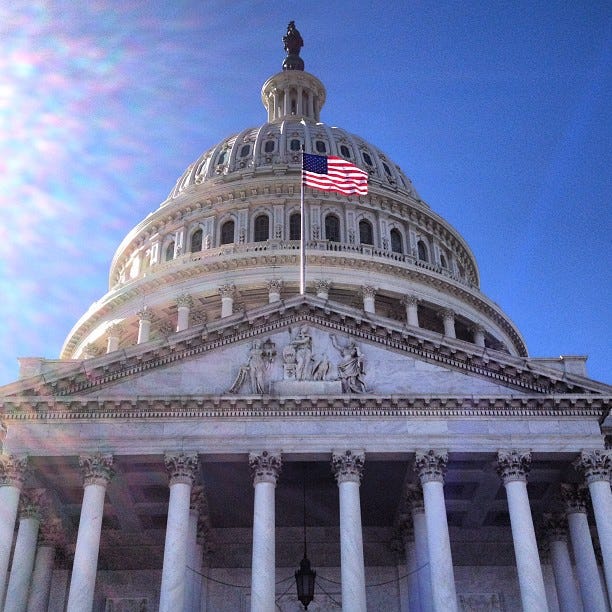
America’s 250th birthday has a lot of people pondering, with some anxiety, the durability of our democratic system. Our polarized, hyperfragmented social media landscape seems to discourage people from seeking out impartial information, which might inconveniently violate the tribal narratives.
Indeed, the very idea of “impartiality” has been under attack for some time. To a news junkie like me, the word has come to feel quaint, bordering on naive. I despair at this. Such cynicism feels like the natural enemy of civic mindedness.
This might be why I was strangely heartened by Jennifer Medina’s piece in the New York Times today about earnest voters seeking voting advice from equally earnest chatbots.
Claude, or at least the persona we call Claude — the character Anthropic’s chatbot plays when it’s working as intended — is nothing if not earnest. But as Medina explains, Claude, like other leading chatbots, is “trained to avoid answering political questions that could expose biases.”
So when a user profiled in the piece wanted to inform herself, she had to phrase her prompt not in terms of election or voting advice, but as a series of research requests about choices that would be “strategic” for groups with her values.
A different user, working with ChatGPT, routed around a refusal to tell him which candidate was “the most libertarian” by asking instead for analysis of the candidates’ voting history.
User after user is described as pleased with the assistance. One said, “I felt so refreshed. That’s the most informed voting I have ever done. It felt like some political expert that knew all of the research and we just sat down over coffee and chatted and they took notes.”
Viewed through one lens, this article is about how to circumvent chatbot guardrails for benign and even patriotic reasons. But Medina doesn’t lean into this, instead working to balance the glowing testimonials with concerns about how AI election advice could go wrong. According to experts she consults: The bots could be overly persuasive, as they are superhumanly good at coming up with facts and explaining them clearly. The facts they give could be wrong, informed by flawed internet sources — but those same experts concede that this could be true for users doing independent research as well.
Medina reports that campaigns are looking for ways to influence how chatbots talk about their candidates, such as by playing to bots’ known love of bullet points.
Interestingly, the possibility of chatbots hallucinating facts doesn’t come up in this piece, which may be an indication that this error mode is in decline, as many insiders are claiming and as I am finding in my own use.
Given all of the horrible ways AI could undermine democracy — deepfakes, social media bots, concentration of power, killing all the voters (and everyone else) in pursuit of goals nobody programmed in — I don’t think “Claude giving bad election advice” even makes my top ten list of election concerns.
I’d even go so far as to say that I think current AIs are probably a boon for democracy when used in this role. The default alternative is often voting based on appearance and vibes. I actually wonder if it would be good for the chatbots to proactively offer to help voters do their election homework. I doubt that will ever happen — it would expose the companies to too many accusations of partiality for too little profit — but anyone trying to envision a future where democracy coexists with powerful AI should probably start thinking about how to augment the electorate’s ability to make informed decisions.
The analyses and opinions expressed on AI StopWatch reflect the views of the individual contributors and the sources they cover, and should not be taken as official positions of the Machine Intelligence Research Institute.