

Last week, we covered a Reuters story announcing that Anthropic had set up a wet lab to conduct AI-assisted biological experiments. The article seemed to imply, by devoting a section to Anthropic’s lab automation efforts, that AIs were doing the work.
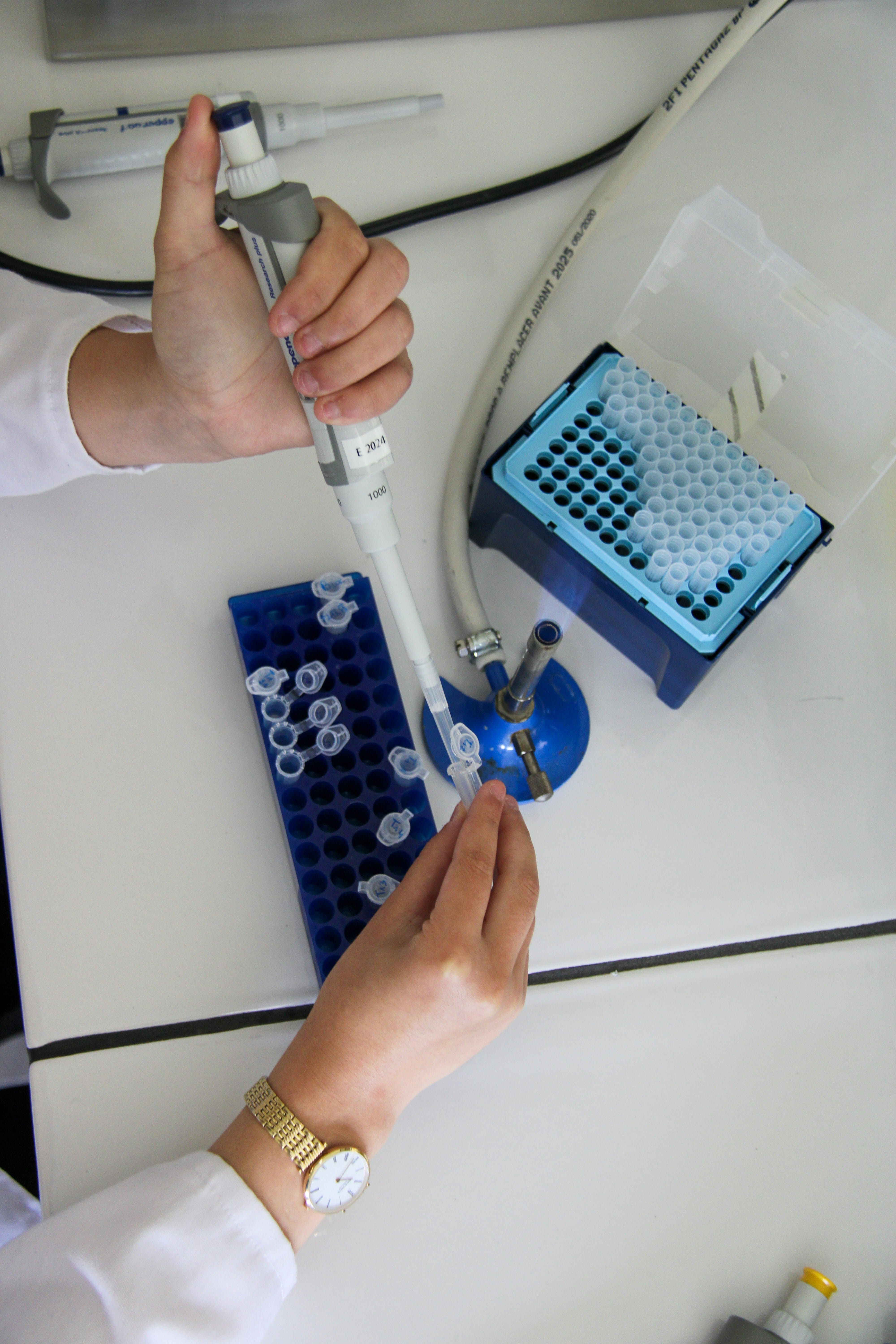
According to Anthropic’s official announcement, that is (luckily) not the case. The wet lab focuses on searching DNA datasets for previously unknown protein families, generating theories about them, and testing those theories experimentally. The announcement reads:
We do research that involves only the lower-levels of the biosafety risk level (BSL-1 and BSL-2) and we do not handle pathogens that can infect humans. All of the lab work is performed by human scientists.
Through this research, Claude has apparently discovered a previously unknown enzyme system in bacteriophage DNA that resembles CRISPR, though the researchers don’t yet know what it does or whether it could have similar medical applications. (Bacteriophages are viruses that infect bacteria, while CRISPR is a naturally occurring biological system that scientists have adapted into a powerful tool for editing DNA.)
Anthropic is sharing the early results “to show the community that Claude can autonomously detect anomalies and drive analyses to initiate biological discoveries” — in my opinion, a pretty clear example of “AI is good!” PR to try to bolster its image amid a surge in public concern about AI and its risks.
Importantly, while the current wet lab isn’t allowing AIs to do actual lab work, this does not represent a company commitment. Anthropic acknowledges its lab automation efforts in other areas, stating:
Although we’ve experimented with using AI to accelerate lab work with initiatives like the Model Hardware Standard, this approach is less conducive to the sort of ad hoc workflows that are involved in our molecular biology research.
And CEO Dario Amodei implies that if the company later does judge lab automation to give their “ad hoc workflows” a leg up, they’ll probably go ahead and try it:
Eventually it may even be possible for Claude itself to safely perform the experiments by autonomously controlling lab equipment, with appropriate safeguards in place, but we aren’t doing that today.
I’d hoped for a more explicit commitment not to turn over a bio lab to AIs...ever. While it’s not the only path to an AI-enabled pandemic or other bioweapon, an AI-run bio lab would almost certainly make it easier to unleash new diseases, or accidentally release harmful biological agents, especially given Anthropic’s limited ability to keep its models under human supervision.
That said, I’m happy to cross this particular lab off my list of “things to worry about” ... for now.
The analyses and opinions expressed on AI StopWatch reflect the views of the individual contributors and the sources they cover, and should not be taken as official positions of the Machine Intelligence Research Institute.