



In this issue:
Automation comes for heavy construction machinery - Automated excavators work on job sites in Texas and Nevada
Some positive applications of AI - Climate and biotech illustrate benefits of AI, soberly used
How to fail at chip export controls without even trying - The monitoring regime for chip export restrictions doesn’t work well and needs to be improved in any case
Dispatches from Joe
Automation comes for heavy construction machinery
Automated excavators work on job sites in Texas and Nevada
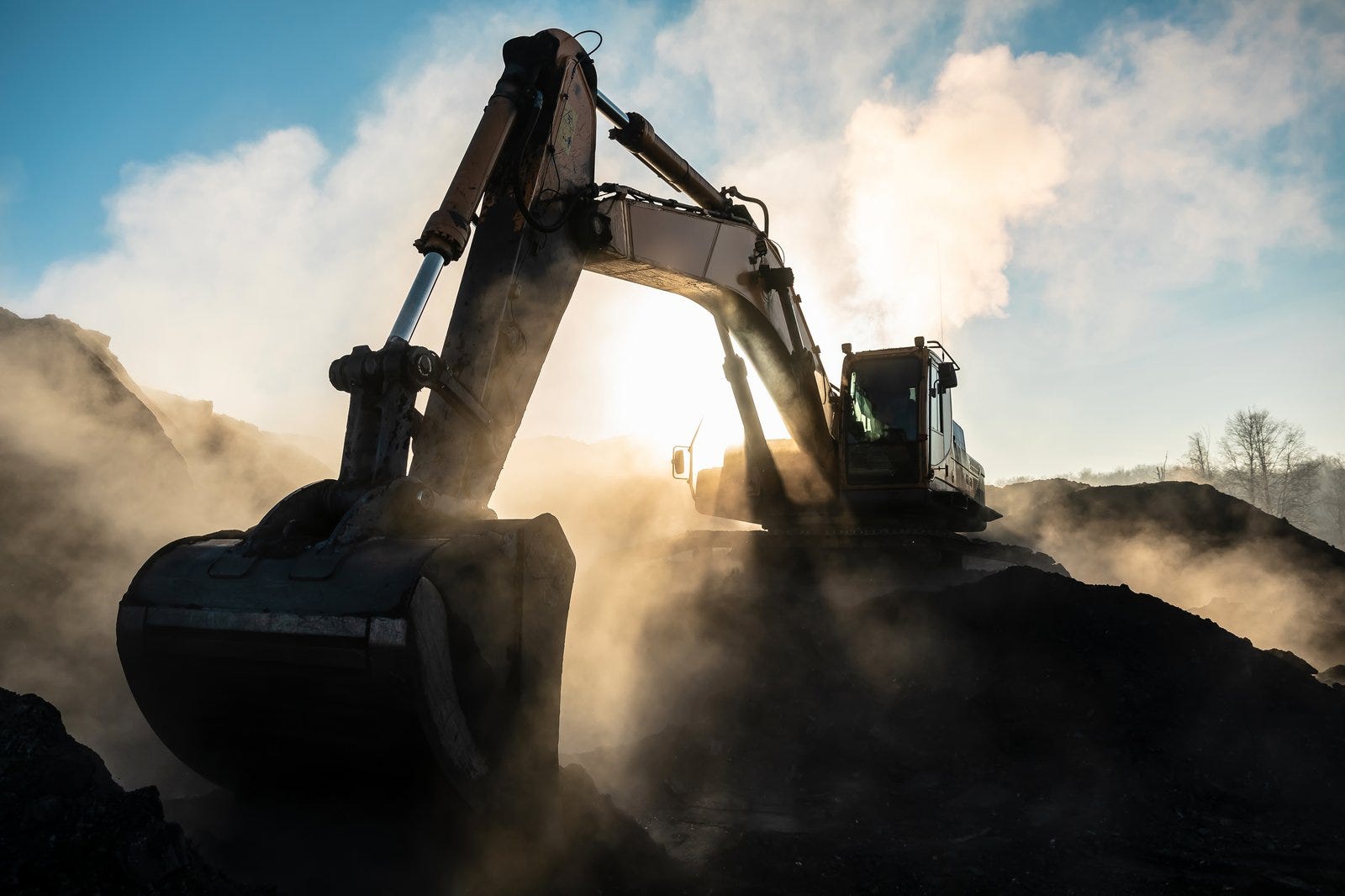
Machine learning is digging into construction work, as automated excavators are tested on commercial sites. Kurt Knutsson of Fox News relays how Bedrock Robotics equips excavators with a sensor and computing package that runs an AI operator, which can call in a remote human operator if it gets stuck.
I noted this development with interest, since most recent AI automation has affected knowledge work, like software, essay mills, mathematics, ghostwriting, and art. It seems like heavy earthwork sits in a sweet spot that makes it ripe for the next phase of automation: Repetitive, narrowly scoped tasks that require costly training for humans to perform safely.
An important caveat is that this is almost certainly a disguised marketing pitch by Bedrock. I would not be shocked to learn their automated excavators cut some corners or are (for now) far more expensive than human operators. This is still the most clear-cut example I’ve yet seen of robots doing messy physical labor. It demonstrates a proof-of-concept for “real-world economic value” that some skeptics doubt AI can bring.
Will this hurt construction jobs? Bedrock argues that skilled operators of heavy machinery are hard to find and train, and industry surveys seem to back this up. They also say “we do not expect operators to be replaced at all,” but instead to move into supervisory roles for fleets of robots.
This claim is a standard talking point for many aspiring automators, but it might well be true, at least in the short term. A human operator managing a fleet of automated systems is standard fare for many professions, including my old field of oil and gas refining. But when it comes to machine learning, the claim that humans will always sit atop the labor pyramid is misleading and myopic: AI companies, remember, are looking to produce general intelligence that can do anything a human can and much more.
Bedrock itself envisions proceeding from excavators to something like an automated swarm of construction robots: Bulldozers, trucks, and graders, all coordinated by software, like an enormous anthill bustling with twelve-ton ants. I’d normally be optimistic about the potential for automated labor like this, but powering the bots with modern AI seems ill-advised, considering the stubbornness and lack of care we’ve seen in AI swarms so far.
Some positive applications of AI
Climate and biotech illustrate benefits of AI, soberly used

I spend much of my time writing about the grave threat AI development poses to us all, because it looks both urgent and woefully under-addressed. Like many technologies, however, AI also has major benefits, a few examples of which we can see in the news today.
One case study: Bloomberg reported a partnership between Google and Cathay Pacific aimed at an unusual climate intervention: avoiding contrails.
Contrails form when humid, hot engine exhaust hits cold air and freezes into ice crystals. They can persist for hours in the right conditions, and they can trap heat like clouds sometimes do, warming the Earth below.
Predictive modeling, aided by AI, can let pilots avoid the patches of cold, humid air that make contrails stick around. A “pilot project” (blame Bloomberg for the pun) in 2025 “achieved a 40% decline in the warming impact of contrails.”
Another area that seems likely to benefit from AI is drug development. Bloomberg wrote that a drug called rentosertib, created with AI help, showed promising results in a preliminary study of lung fibrosis patients.
Both Bloomberg and the New York Times frame the drug as potentially slowing aging, based on measurements of biological “aging clocks” which are themselves based on AI models. A bit of research suggests that this is probably overstating what the drug can really do — it could easily be treating the patients’ actual disease, say by reducing inflammation, and thereby improving various health markers — but the general trend of AI contributing to drug discovery is real, and it’s prompting significant investment from the medical industry.
Even the automated excavators I covered earlier today could be a net good for humanity, just as the steam drill once was.
I choose to focus on these examples because technology is complicated. We can see evidence that AI is real and often positively transformative, and evidence that blindly scaling towards superhuman systems will end badly for us; both these things can be true at once. We’re a bit like Tolkien’s dwarves digging greedily in the mines of Moria; some of us already know or suspect there’s a Balrog down there that would destroy us and all our gains, but there’s also lots of shiny gold. We don’t know exactly how far we can dig before we hit a point of no return.
Controlling this technology doesn’t require shutting down all the potential benefits; a halt to frontier development still leaves plenty of room for predictive weather models, AI-assisted drug development, and special-purpose machinery. But there would almost certainly be some veins of gold we’d have to leave untouched for a time.
Being a credible voice for coordinated restraint means being willing to sincerely acknowledge, even celebrate, the real good that AI technology can bring, while still holding firm that in this mine, we shouldn’t dig deeper than our science can see.
Dispatch from Robert
How to fail at chip export controls without even trying
The monitoring regime for chip export restrictions doesn’t work well and needs to be improved in any case
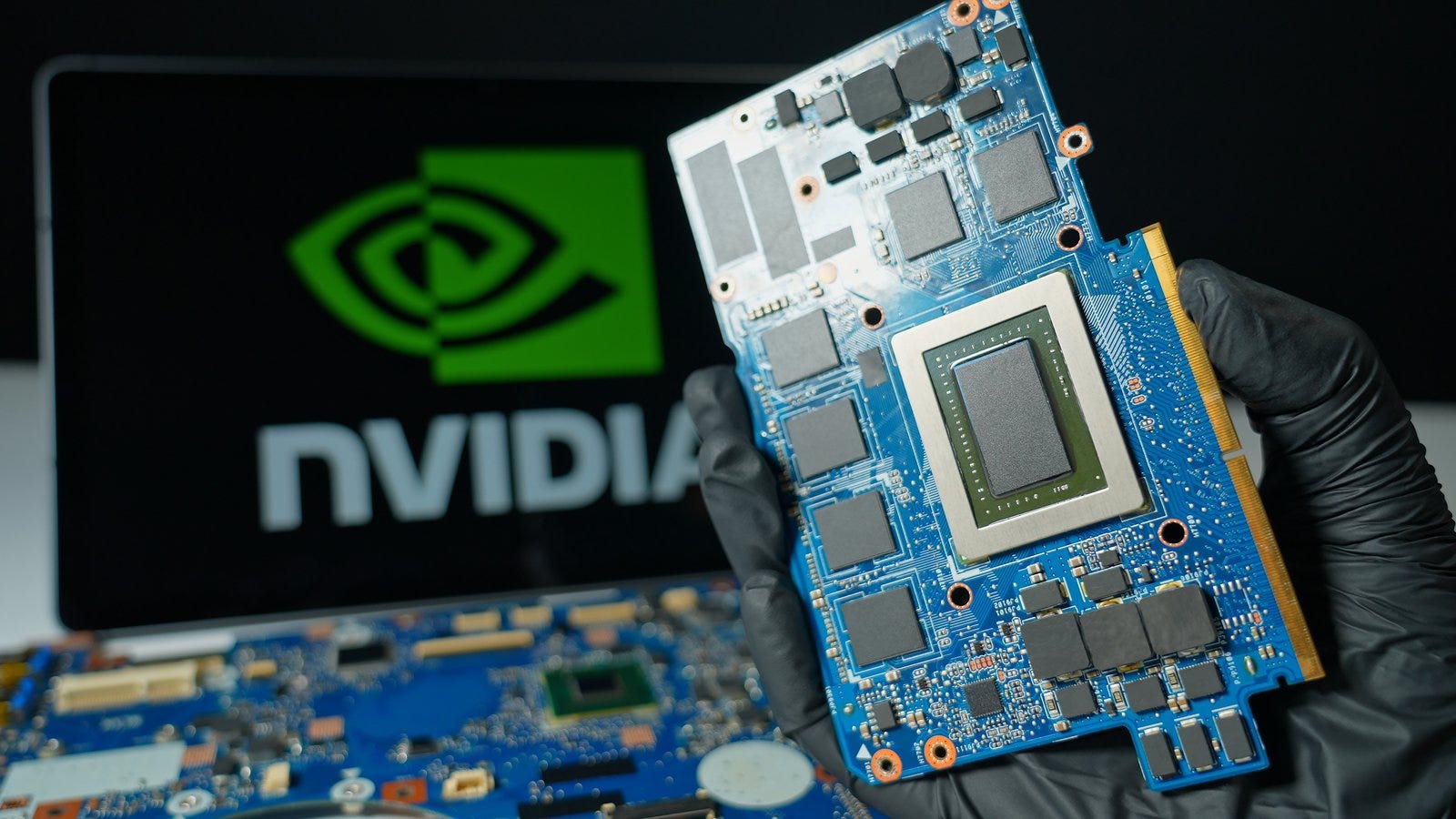
U.S. chip export controls appear to have some loopholes as big as a barn door, as the New York Times reports in an in-depth investigation.
Through these export restrictions, the U.S. aims to ensure that American companies maintain their technological edge in both chip manufacturing and the AI sector. In practice, however, the enforcement of these restrictions seems to fall short.
The NYT reporters illustrate this using the example of the Chinese state-owned company Inspur, which supplies Chinese companies and universities and — crucially — the Chinese military with high-performance chips and computer infrastructure that it purchases in the U.S.
To that end, Inspur had a branch office in Fremont, California. At least until the Biden administration placed the company on a blacklist of firms considered a security risk and prohibited it from doing business in the U.S.
Mission accomplished?
Apparently, all that was needed to circumvent the export restrictions was to change the nameplate at the Fremont office. It no longer reads “Inspur,” but rather “Aivres” — which is known to be a subsidiary of Inspur.
Between 2024 and 2026, this subsidiary exported, among other things, Nvidia’s strictly controlled Blackwell chips to various Southeast Asian countries for a total of $3 billion, including to a company named Megaspeed, which, according to the New York Times, has in the past been suspected by U.S. authorities of smuggling these chips into China.
But even the chips that do not end up directly in China go to Southeast Asian companies, which in turn provide cloud computing services to the Chinese tech giants, who use them to train their AI models.
Given such ineffective export restrictions, it’s actually no surprise that Chinese AI firms are hot on the heels of their American counterparts.
On top of that, the chips produced in China itself are also improving. Although they are still relatively far from the performance level of American chips, according to a Bloomberg report, it seems that the U.S. administration’s policies are making the Chinese product more attractive to third-party customers.
For example, Malaysia has decided to run its national AI program using cloud infrastructure and AI chips from Huawei instead of an American product, as Malaysia views the U.S. Cloud Act as a risk to security and sovereignty. The Cloud Act, signed by President Trump, stipulates that U.S. authorities must be able to access data stored on cloud infrastructure provided by American companies at any time, even if the servers are located in another country.
The Malaysian Prime Minister commented on this rather dryly during a Q&A session with students:
“I do not consider that law reasonable, but how does one argue with President Trump?”
It is important for the U.S. to step up its game here. Today, the U.S. lead in computing power and AI technology is at stake. But in a future where sanity prevails and we implement an international agreement to prevent the premature creation of artificial superintelligence, it will be essential to closely monitor compliance. This will mean ensuring that chips flow only to authorized users for authorized uses.
The analyses and opinions expressed on AI StopWatch reflect the views of the individual contributors and the sources they cover, and should not be taken as official positions of the Machine Intelligence Research Institute.